

By Zeeshan · Last updated November 15, 2026
Direct answer: Show the product in its permitted ordinary setup, with its base and contact surface visible. Record the normal action continuously and keep any supporting hand in view. Describe the movement and conditions you actually observed. One tabletop demonstration does not establish a load rating, durability or universal tip resistance.
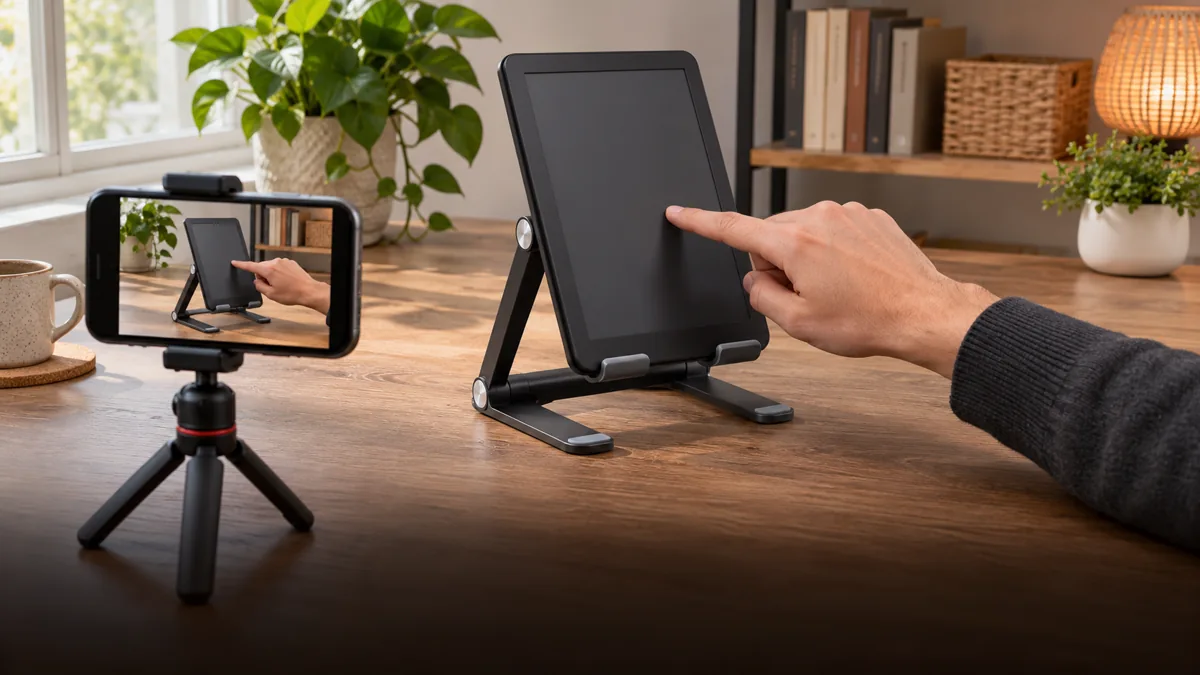
A tablet stand can look steady in a tight shot of the screen while a hand outside the frame holds the base. A wider shot can reveal the useful detail: how the stand sits on the desk when the screen is touched normally. Make the support and setting visible before asking the shopper to interpret the movement.
For help planning a focused review, explore the current ACE training page. The aim here is ordinary-use clarity, not a laboratory stability test.
Table of Contents
Which ordinary action should you show?
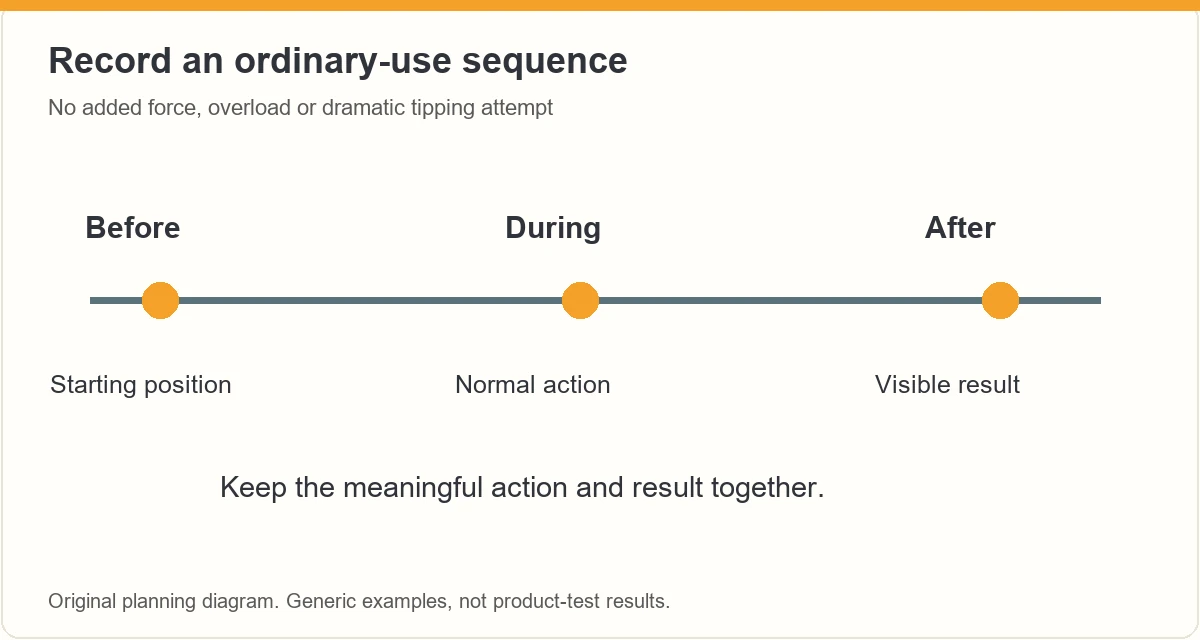
Choose an action the product is intended to support: touching a screen on a stand, opening a permitted drawer or reaching into a small desktop organizer. Check the exact instructions and supported configuration first. Use a low-consequence unpowered item for a simple filming exercise.
Do not add weights, force, an unstable surface or a dramatic tipping attempt for the video. A normal-use demonstration can be useful without becoming a safety evaluation. Our short-review guide can help keep the question narrow.
What setup information should stay visible?
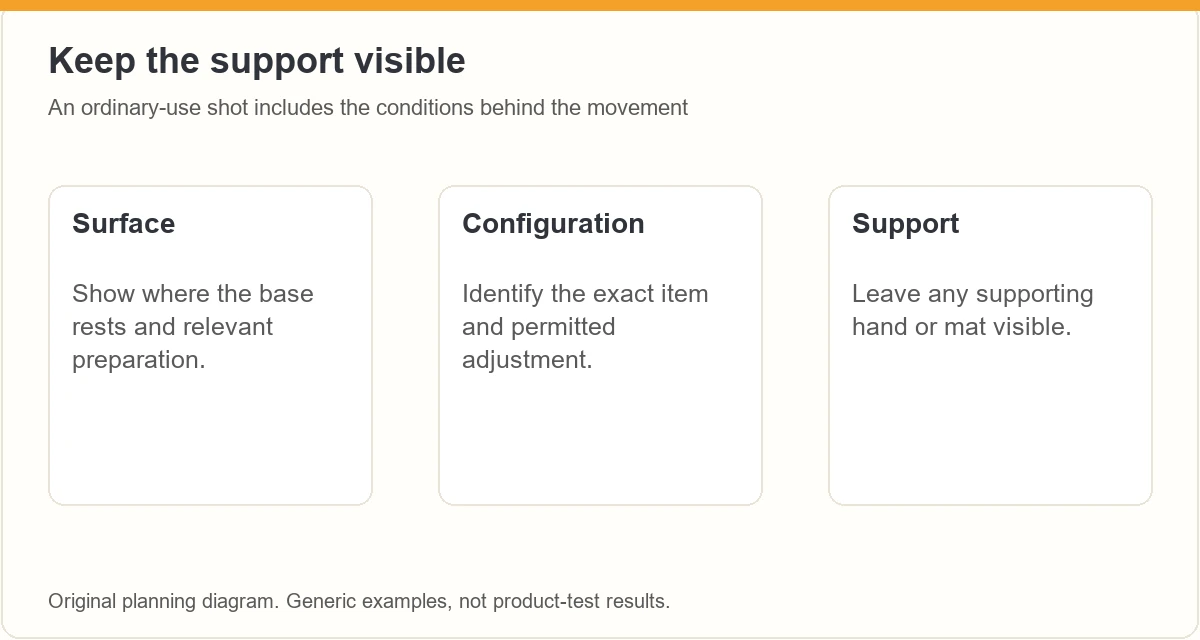
Show where the item rests, how it is adjusted and what is on it. Name a relevant support that the viewer cannot otherwise judge, such as a mat or a hand. A hidden grip can change the result more than the product feature being discussed.
- Keep the full contact area in a wide starting view.
- Identify the actual item and permitted configuration.
- Explain preparation that affects grip or support.
- Keep the supporting hand visible when one is used.
Separate a product finding from a setup change. Moving from a hard desk to a padded surface changes the conditions, so it should not be edited into a seamless before-and-after claim.
Where should you place the camera?
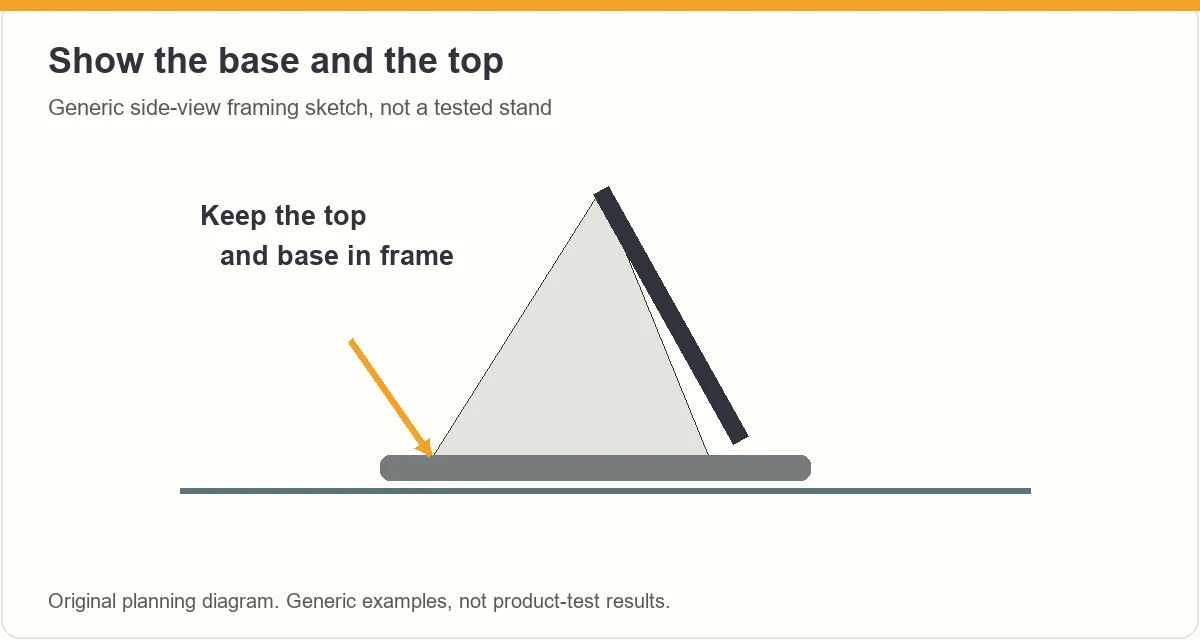
Use a stable camera position that includes the base and the part that could visibly move. A low side angle may reveal the feet better than an overhead view. Add a closer view only if it explains a contact point without removing the context.
| What you want to show | Keep in frame | Common missing context |
|---|---|---|
| Base movement | Feet and nearby surface | A hand holding the base |
| Screen or top movement | Top and base together | Camera moving at the same time |
| Ordinary opening action | Moving part and support | A cut before the difficult moment |
If camera movement makes the result ambiguous, repeat the shot with a more stable recording setup and explain the repeat when relevant. The size and fit guide covers the separate question of dimensions and clearance.
What should the uninterrupted shot contain?
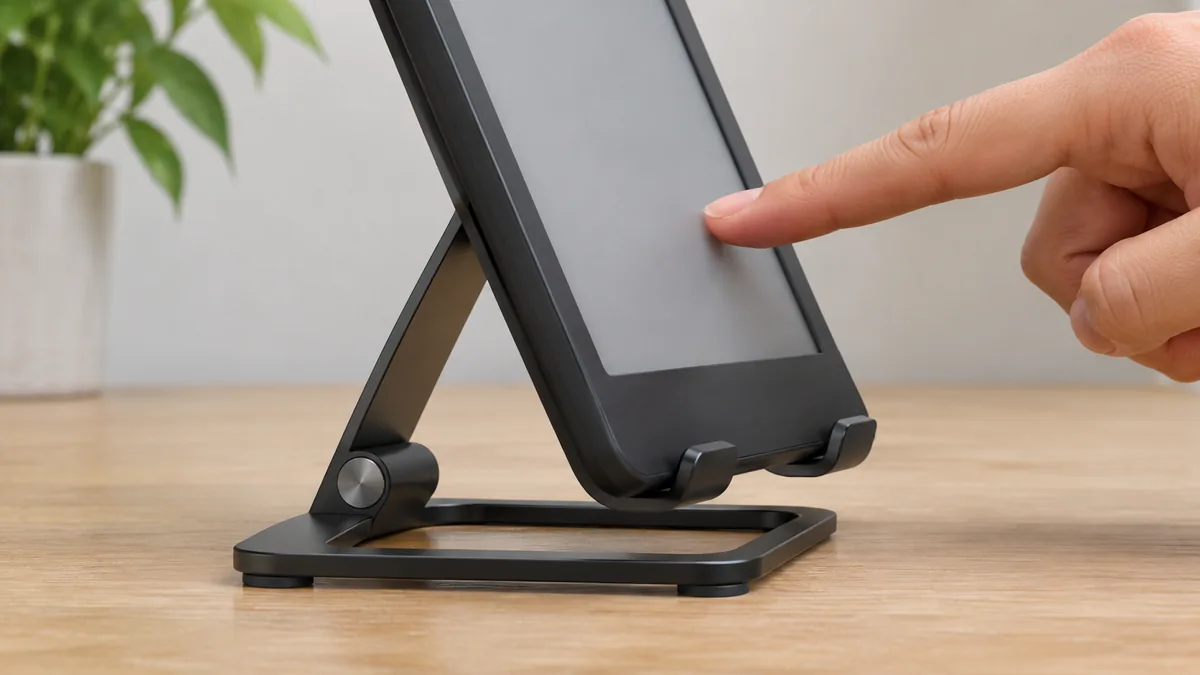
Record the starting position, ordinary action and immediate result together. Keep a supporting hand or stop visible. If the item requires two hands in normal use, show that use rather than trying to operate it differently for the camera.
In a hypothetical stand example, frame the feet and screen, make a normal screen tap and leave time to see what happens afterward. The example explains shot planning. It does not report a tested stand, a measured force or a successful stability result.
How do you describe movement fairly?
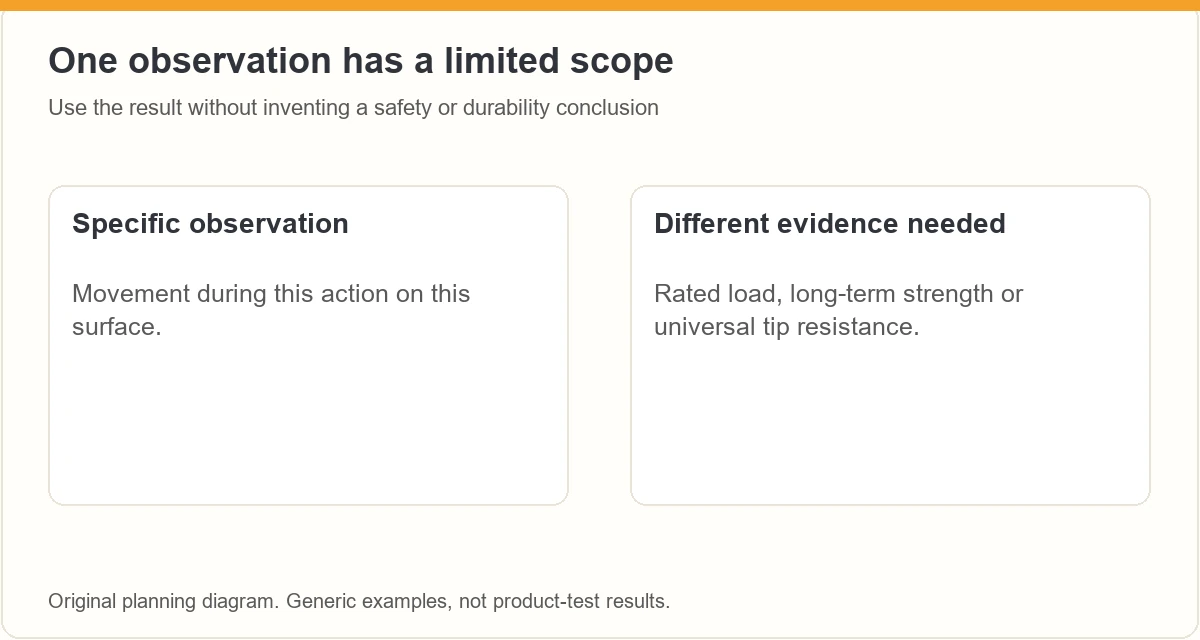
Use a specific observation under stated conditions. If your own footage supports it, you could describe the base moving on your desk during the shown action. Avoid replacing that limited finding with “never slips” or “unsafe for everyone.” A camera angle can hide movement as readily as it can exaggerate it.
Do not call a visual impression a measured displacement or force. If you have not made a controlled measurement, say what is visible. Our version-comparison guide helps plan a fairer comparison when two items or configurations are involved.
Which conclusions need other evidence?
A brief ordinary-use clip does not establish a certified load limit, long-term hinge strength or tip resistance in every setting. If the manufacturer publishes a limit, keep it attributed and retain the stated conditions. Do not test a claimed limit by improvising an overload.
Amazon’s seller product-video guidance discusses planning a real-use demonstration. It does not make an informal filming exercise a safety test or guarantee a creator’s upload acceptance. For a product that must be installed or secured, follow its actual instructions and avoid offering an improvised alternative.
What should you check before exporting?
- The base and relevant surface remain visible.
- The recording camera is stable enough to interpret movement.
- Any supporting hand or mat is disclosed.
- The action is ordinary and within the actual instructions.
- Cuts do not remove the result or a meaningful setup change.
Keep the explanation synchronized with the view. The W3C description guidance is helpful for naming an important visible movement aloud. Review the captions too: a confident label should not turn an ambiguous shot into a certainty.
Frequently asked questions
Can I hold the base during the demonstration?
If that is part of the ordinary use you are showing, keep the hand visible and explain it. Do not hide the support while implying that the product stayed still on its own.
Do I need a force meter for this video?
Not for a clearly described ordinary-use observation. Avoid numerical force or standardized-test claims unless you have the appropriate method and evidence.
Can one shot prove that a stand never tips?
No. A single setup and action support only a limited observation. Different surfaces, configurations and use conditions may matter; do not make a universal safety claim.
What if the camera moves during the action?
Check whether viewers can distinguish camera motion from product movement. Re-record with a stable setup when the result is unclear, and do not present a repeat as an untouched first attempt.
What should you do next?
Let the frame show the support and conditions behind your observation. A normal action, visible base and precise explanation can answer the shopper question without an exaggerated test or universal promise.
ACE from Zonbase is an Amazon product research agent for creators. It shows which products have real demand and few existing videos, then helps you plan what to film and say. Start the free ACE training to plan your next review video.
For more on this, see film product assembly and film product cleaning.
Show the conditions behind the result
Explore ACE training for planning product demonstrations. Use the exact item, instructions and ordinary action you can document.
ACE is separate from Amazon. Training does not guarantee Amazon acceptance, placement or earnings. Check the current page for availability and offer details.
