
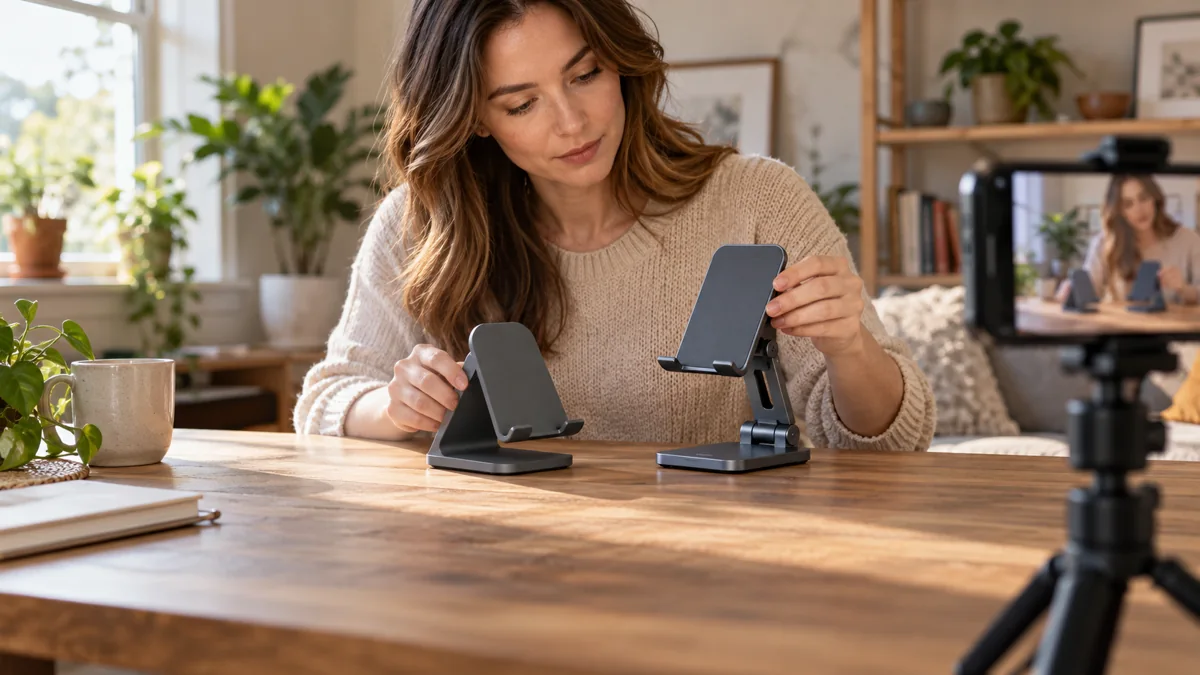

By Zeeshan · Last updated November 1, 2026
Direct answer: To compare product versions in an Amazon review video, identify the exact model and variation of each item, answer one shared buyer question under consistent conditions and keep the labels attached to the correct footage. Describe only the differences you can verify, and check the actual product association before uploading.
Two stands can share a color and a familiar product name while using different hinges, dimensions or accessories. A useful comparison keeps those identities straight. Otherwise the viewer may see a real difference and still be sent to the wrong version.
For help organizing a focused comparison, explore the current ACE training page.
Table of Contents
Which difference matters to the buyer?
Pick a question both items can answer. For a pair of desktop stands, that might be how the viewing angle changes or how each stand folds for storage. It is a tighter question than asking which one is better in every situation.
Be precise about what “version” means. A different color is a variation. A revised mechanism may be a model change. A bundle can contain the same main item with different accessories. Use the manufacturer’s actual description and the identity of the samples you own, rather than inventing a generation name.
Our short-review question guide can help define the decision. If you only have one item, a single-product demonstration with verified facts is more useful than pretending you tested the alternative.
What should you record about each item?
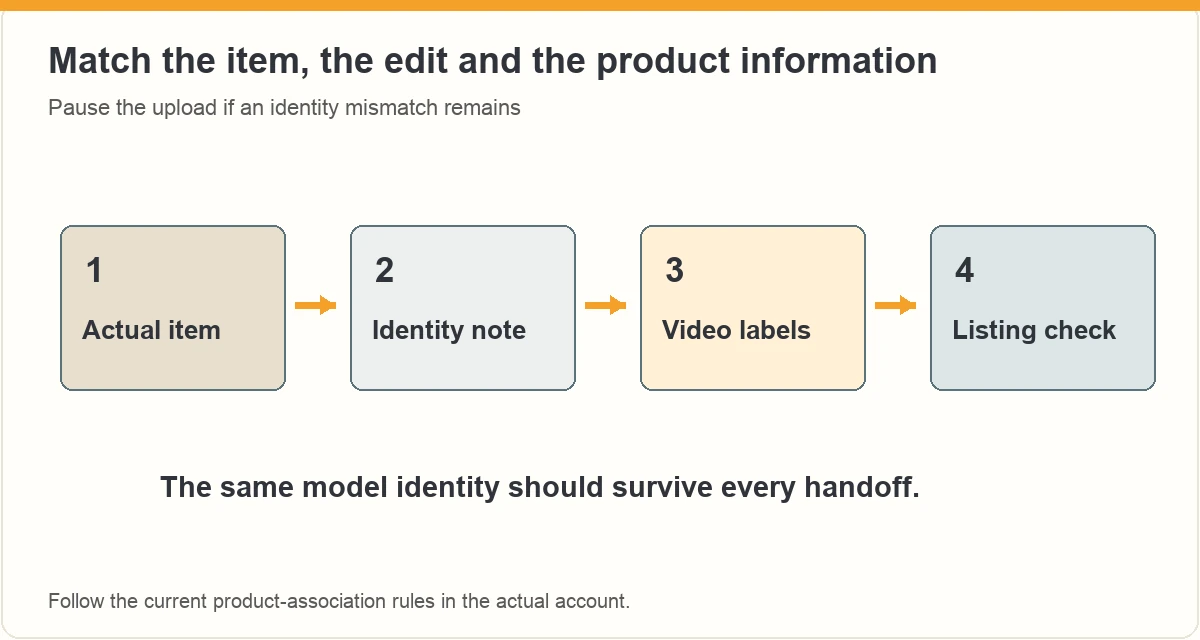
Before filming, make a simple identity note for each sample. Record the model identifier, selected size or color where relevant, pack contents and the source you used to confirm them. A purchase date can provide context, but does not prove a particular manufacturing revision.
- Read the identifier on the actual item or its supplied documentation.
- Compare it with the exact listing variation you intend to discuss.
- Check the quantity and accessories included with your sample.
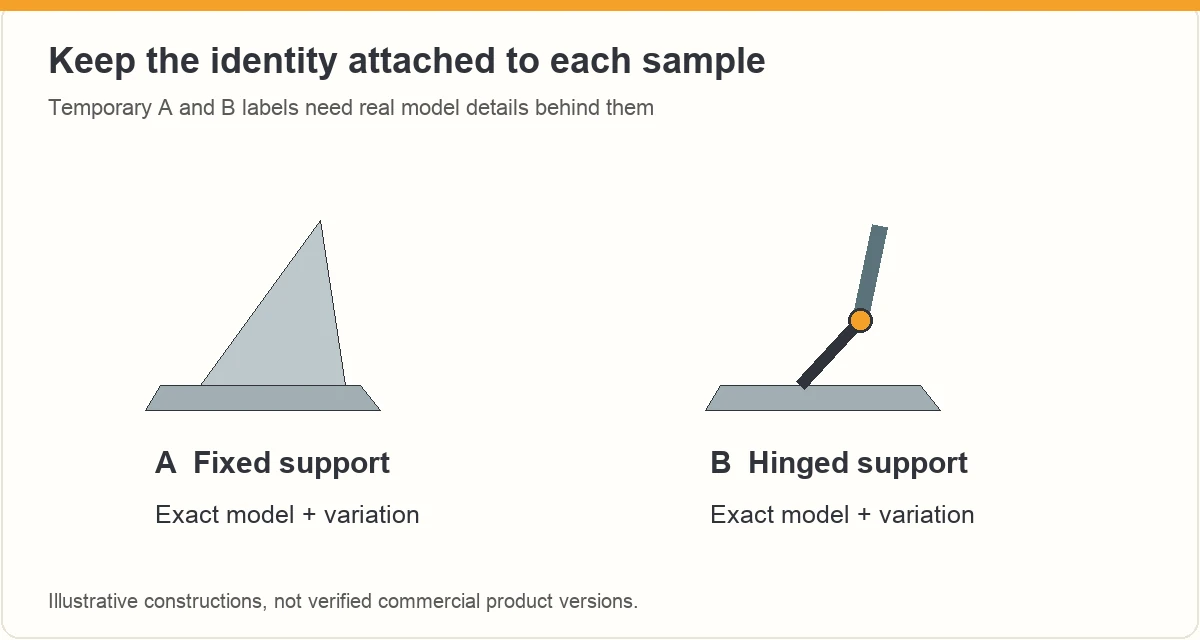
- Give each sample a temporary filming label, such as A and B.
- Keep that label consistent in the footage, notes and edit.
Leave personal order information out of the frame. If the item’s label and the listing disagree, resolve the mismatch before presenting the video as a comparison of those exact models. Similar appearance alone is not enough to fill a missing identifier.
How do you keep the demonstration comparable?
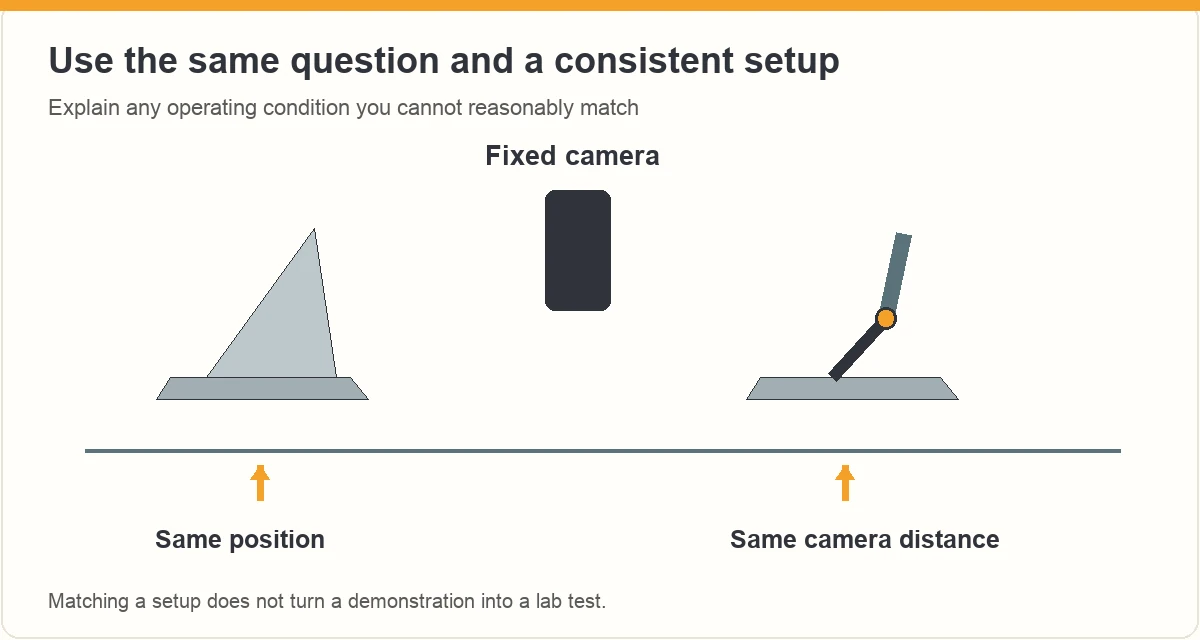
Use the same buyer task, recording position and explanation structure for both items. Keep the camera at the same distance when showing scale. Use equivalent operating conditions within each product’s instructions, and explain any condition that cannot be matched.
| Comparison element | Keep consistent | Explain a difference |
|---|---|---|
| View and scale | Camera distance and product position | A needed angle change |
| Ordinary use | The task being demonstrated | Different supported use cases |
| Accessories | What is attached during the sample | Bundled versus separately obtained parts |
| Editing | Speed and treatment of each sample | Cuts that remove a meaningful step |
Consistency does not make a demonstration a laboratory test. It simply helps the viewer understand what changed. Do not turn a visual difference into a numeric performance advantage unless you used a suitable measurement method and can explain it.
Which shots prevent the versions getting mixed up?
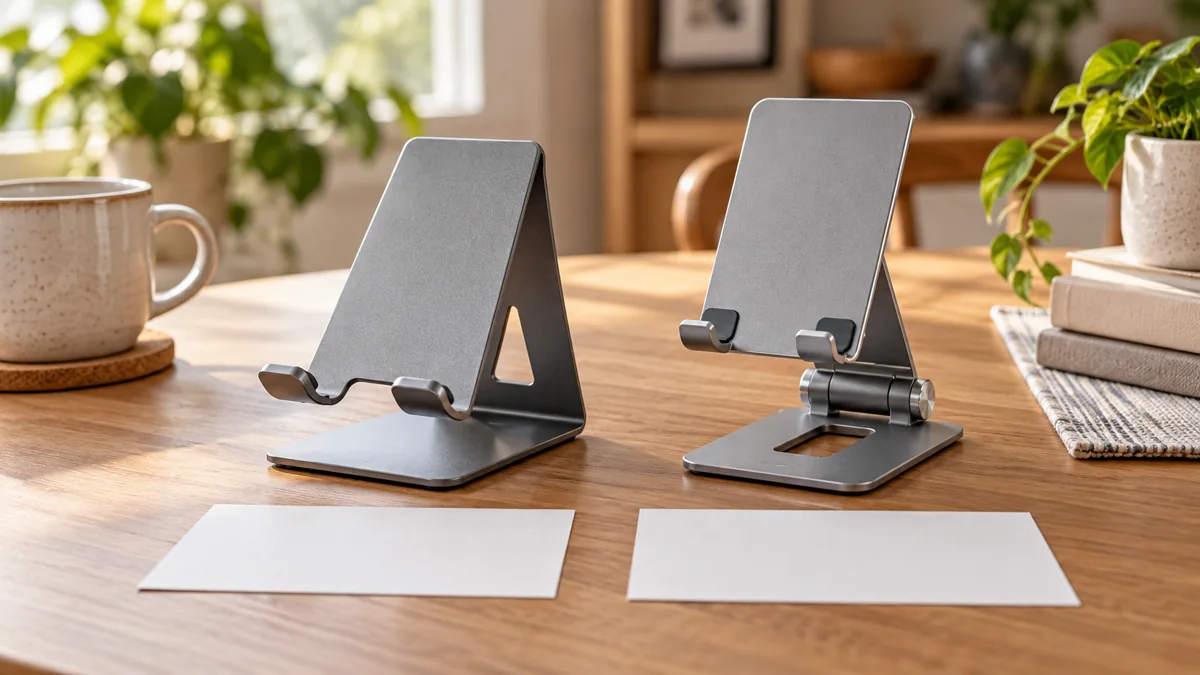
Show each item separately with its correct identifier, then include a side-by-side view that establishes the relationship. Use simple A and B labels in your notes and edit, backed by the real model names in the explanation. Keep the labels readable without covering the mechanism.
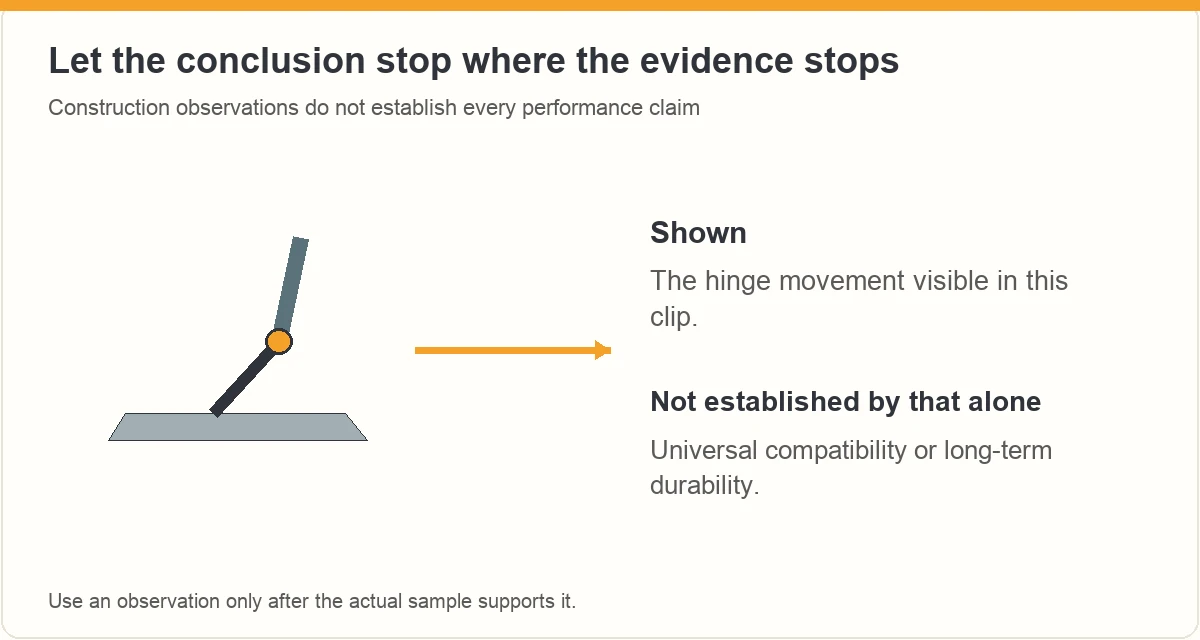
For a hypothetical fixed stand and hinged stand, show the normal position of each before moving the hinge. Then show the adjustment or folding action continuously. This demonstrates the mechanism; it does not establish that every phone, case or desk arrangement will behave the same way.
If you reverse the items for a camera angle, update the labels with the footage. A left-versus-right shortcut can fail as soon as a close-up is rearranged. Rewatch the export with the actual items and identity notes beside you.
How narrowly should you state the conclusion?
Tie the conclusion to the action the viewer just saw. “This sample folds at the hinge shown here” is a specific construction observation. “The newer model is more durable” requires evidence about durability and a verified basis for calling it newer.
A useful conclusion can favor different items for different needs. A fixed support may suit someone who wants that fixed position, while an adjustable mechanism may suit someone who needs the demonstrated movement. Do not invent a preference, stability result or compatibility outcome that you did not observe.
Separate manufacturer information from your own experience. Identify a quoted specification as such and keep its conditions. If a difference cannot be confirmed, say what remains unknown instead of using a confident label to hide the gap.
What should you check against the Amazon listing?
Return to the exact product information before the upload. Confirm the item, model, relevant variation and included quantity still match the footage. Amazon’s explanation of influencer-video review includes correct ASIN association alongside useful demonstration and meaningful information.
This does not mean that a similar listing is interchangeable with the one you used. Follow the current association controls and rules in your own account. Do not import a seller upload tutorial into an influencer workflow or assume you can select every related variation.
Keep an internal record of the actual products and listing URLs so a later edit can be checked. That record supports your workflow; it does not guarantee where Amazon will place the finished video.
What belongs in the comparison’s final review?
- Both model identities match the actual samples.
- A and B labels follow the correct footage.
- The same buyer question is answered for both items.
- Relevant condition and accessory differences are explained.
- Claims match the demonstrated observations or clearly attributed specifications.
- The intended product association is checked before upload.
The FTC’s endorsement guidance requires genuine experience and supported statements. Keep any required relationship disclosure clear. Use the script guide to give each item the same concise question, demonstration and interpretation.
Frequently asked questions
Can I call an item the new version because I bought it recently?
A recent purchase does not establish a model revision. Confirm the model identifier and the manufacturer's description of the change. Stock, packaging and purchase dates can differ. If you cannot verify a revision, describe the exact samples you have without inventing a generation label.
What if I only own one of the versions?
Demonstrate the item you can actually inspect. You may identify a documented specification for another version as manufacturer information, but do not imply a hands-on comparison. Keep the distinction clear and avoid declaring a performance winner based on an item you have not tried.
Should I compare bundled and unbundled products as if they are identical?
Explain the supplied quantity and accessories for each sample. A useful comparison can include different bundles, but the viewer needs to know what is creating the difference. Do not present a separately obtained accessory as included or assume every seller supplies the same contents.
Does showing two versions mean both can be associated automatically?
No automatic result is established by this filming method. Review the current product-association rules and controls in your own account and use the actual items shown. A comparison does not guarantee eligibility, distribution or acceptance, and similar names do not resolve a model mismatch.
What should you do next?
Keep one question, two clearly identified items and a conclusion that fits the evidence. The comparison is useful when the viewer can follow both the difference and the conditions behind it.
ACE from Zonbase is an Amazon product research agent for creators. It shows which products have real demand and few existing videos, then helps you plan what to film and say. Start the free ACE training to plan your next review video.
For more filming techniques, see how to show product size and fit, film reflective products and record product noise in Amazon review videos.
Build a comparison around one decision
Choose the buyer question before deciding which product should win. Explore ACE training for a guided starting point for planning useful product demonstrations.
ACE is separate from Amazon. Training does not guarantee Amazon acceptance, placement or earnings. Check the current page for availability and offer details.
