
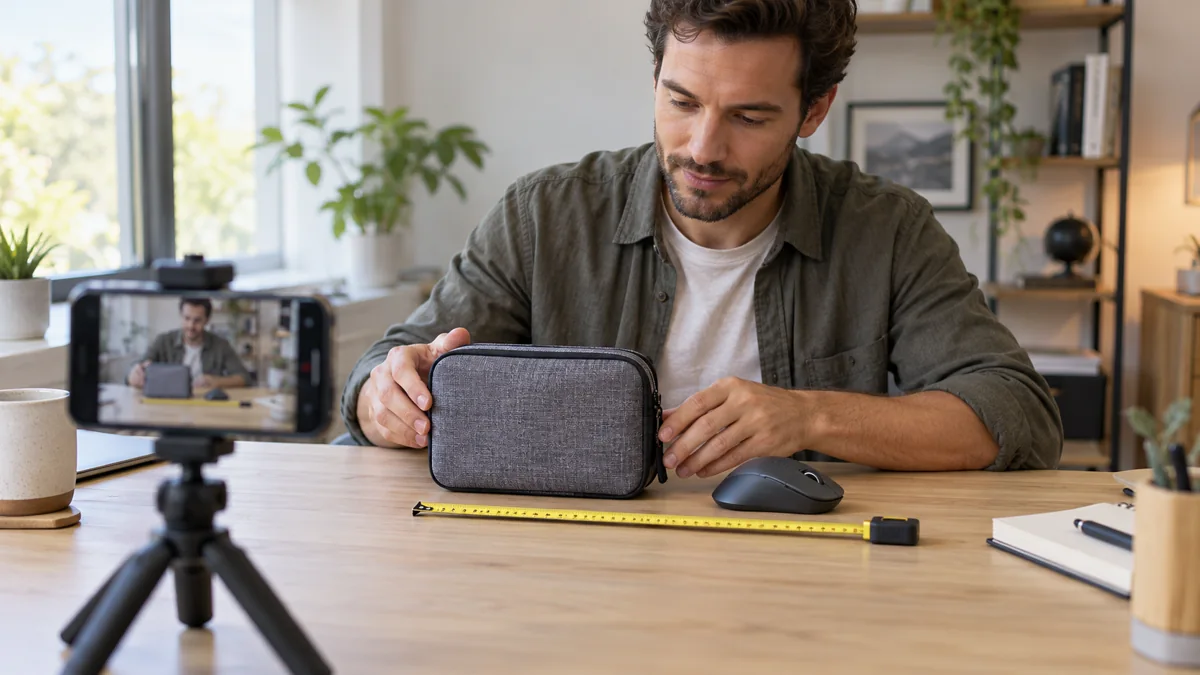

By Zeeshan · Last updated October 23, 2026
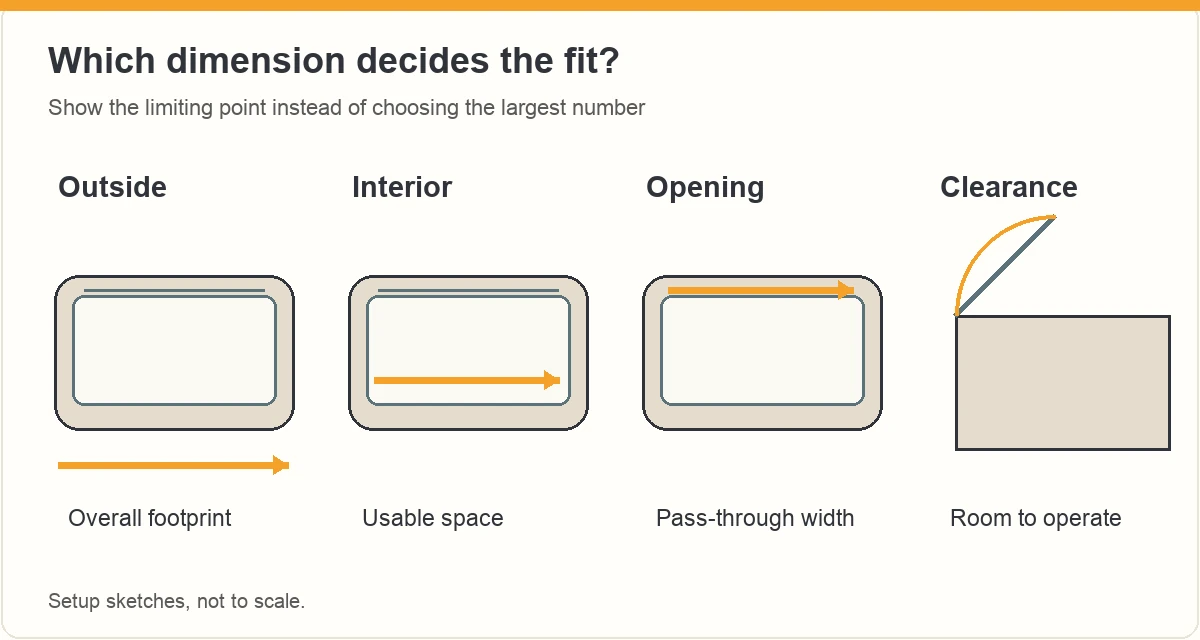
Direct answer: To show product size and fit in an Amazon review video, film the relevant measurement with its endpoints visible, then demonstrate the actual item going into the actual space. Distinguish outside dimensions, usable interior space, opening size and operating clearance instead of treating one number as proof of fit.
A pouch can be wide enough on the outside and still have an opening too narrow for your mouse. A desk organizer can fit on a shelf yet leave no room to lift its lid. A useful size video shows the moment that decides whether the product will work, with the ruler there to explain why.
Need help turning a fit question into a filming plan? Explore the current ACE product-video training before choosing your next demonstration.
Table of Contents
Which size question should the video answer?
Start with the buyer’s intended use. “How wide is it?” is different from “Will my mouse fit through the zipper?” Write one question before choosing your camera angle. It keeps the video from becoming a list of dimensions with no practical meaning.
| Buyer question | Useful evidence | What it does not establish |
|---|---|---|
| Will it sit in this space? | Outside dimensions and the space opening | Room to use controls or open the lid |
| Will this item go inside? | Interior dimensions plus insertion | Fit for other objects with different shapes |
| Can I close it normally? | A continuous closure shot | Long-term durability under that load |
| Can I use it once installed? | Clearance and normal operation | Compatibility with every installation |
If you are still choosing a product, use the beginner product-finding guide to start with something you can access and demonstrate yourself.
How should you film a ruler or measuring tape?
Use a visible physical reference that suits the object. Place it along the dimension you are explaining, keep the starting point in view and hold it straight rather than following a curved path unless a curved measurement is the question.
- Show the whole product so the measurement has context.
- Bring the relevant edge and the ruler into the same clear view.
- Show both endpoints before moving closer to the reading.
- Name the unit and say whether you are measuring inside or outside.
- Repeat any ambiguous reading before making a fit claim.
Keep the ruler close to the surface being measured. A ruler near the camera and a product farther away can make the visual comparison misleading. Avoid a wide-angle close-up when it exaggerates the nearest edge. Step back enough to keep the important faces readable, and check the recording before continuing.
Why are opening size and usable space different?
A flexible pouch has walls, seams, corners and a zipper. Its widest exterior point is not automatically the width of the usable compartment or the open zipper. Show the limiting part rather than relying on the most generous number.
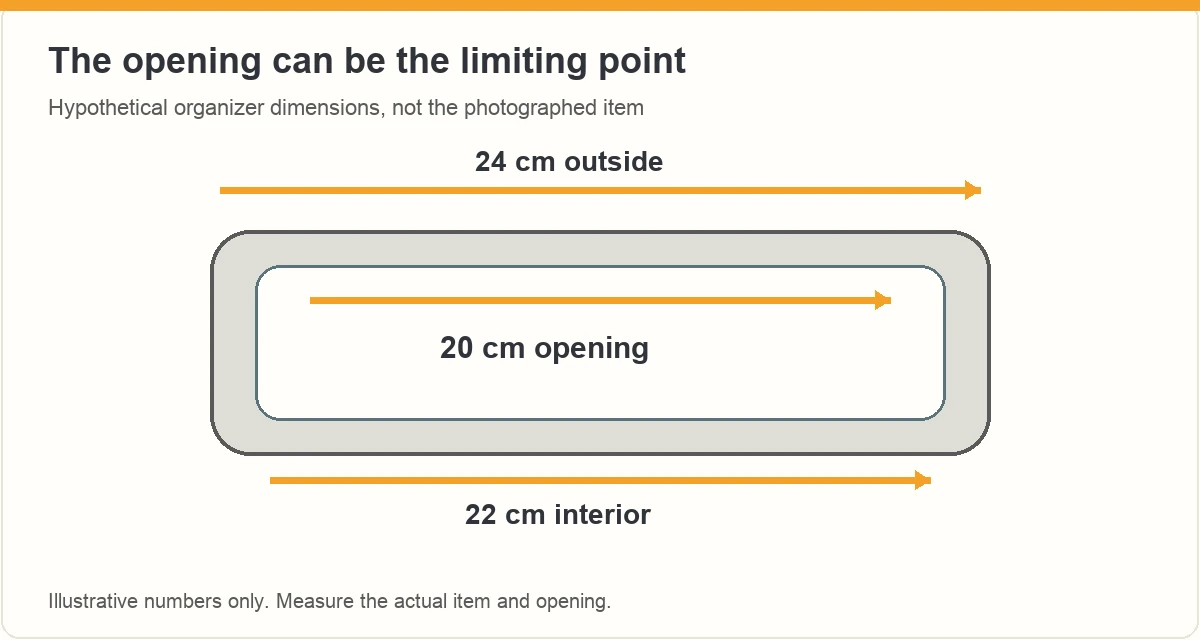
In a hypothetical example, an organizer could be 24 cm wide outside, 22 cm inside and only 20 cm across the usable opening. An object 21 cm wide might appear suitable from the exterior number but still fail to pass through the opening. These numbers illustrate the distinction; they do not describe the photographed pouch.
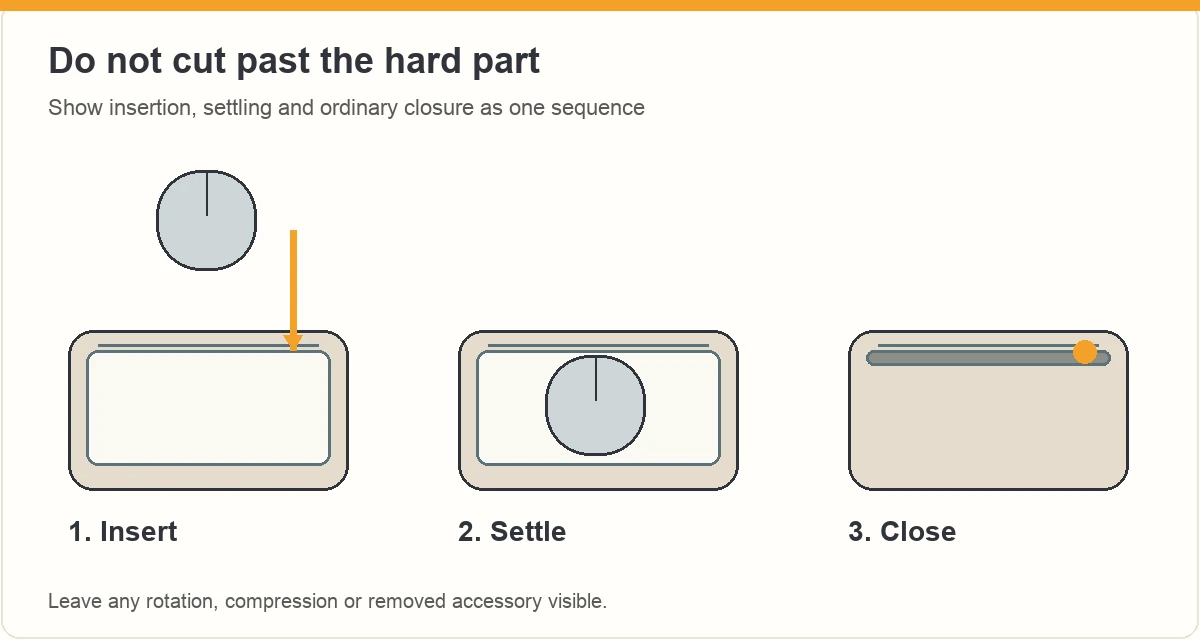
Film the actual insertion if you have both items. If you must rotate, compress or remove something, leave that action in the video and explain it. A cut from “next to the bag” to “already inside” conceals the very question the buyer needs answered.
What does an honest fit demonstration look like?
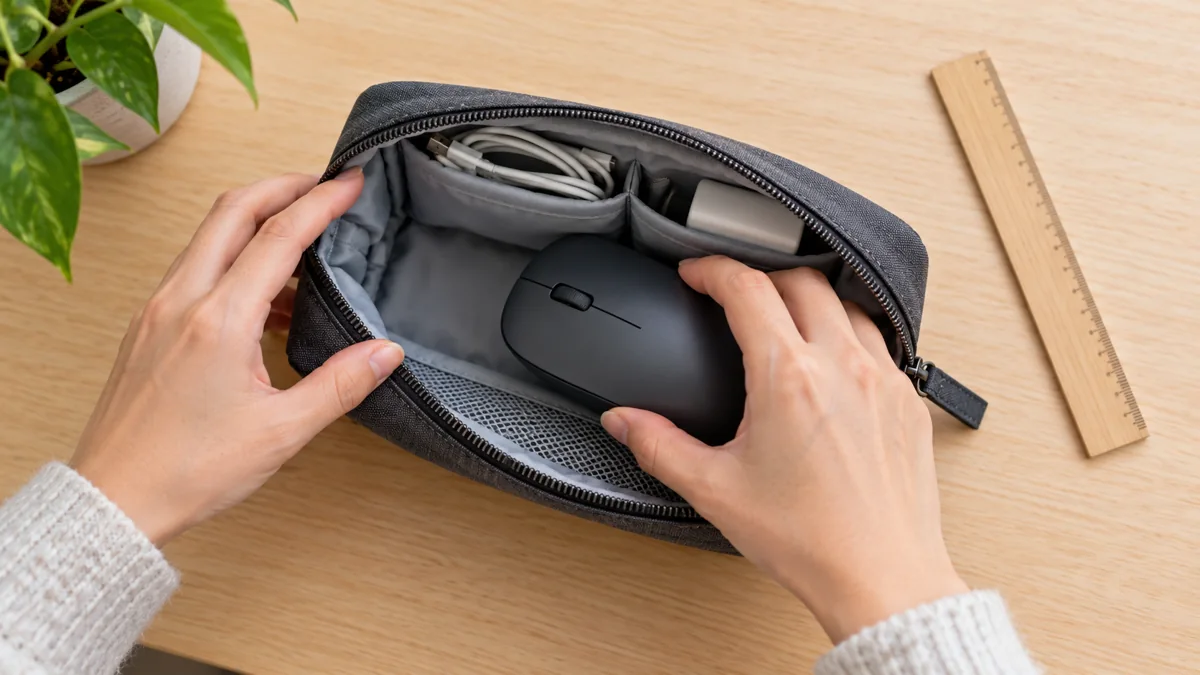
Identify the exact item, model or version being demonstrated when it matters. Then show the object entering the space, settling into place and closing or operating normally. Do not force an object past resistance just to finish the shot.
For the pouch example, show the mouse going through the opening, resting in its compartment and the zipper closing without your hands pushing the contents into a distorted shape. Reopen it if the viewer needs to see how much room remains.
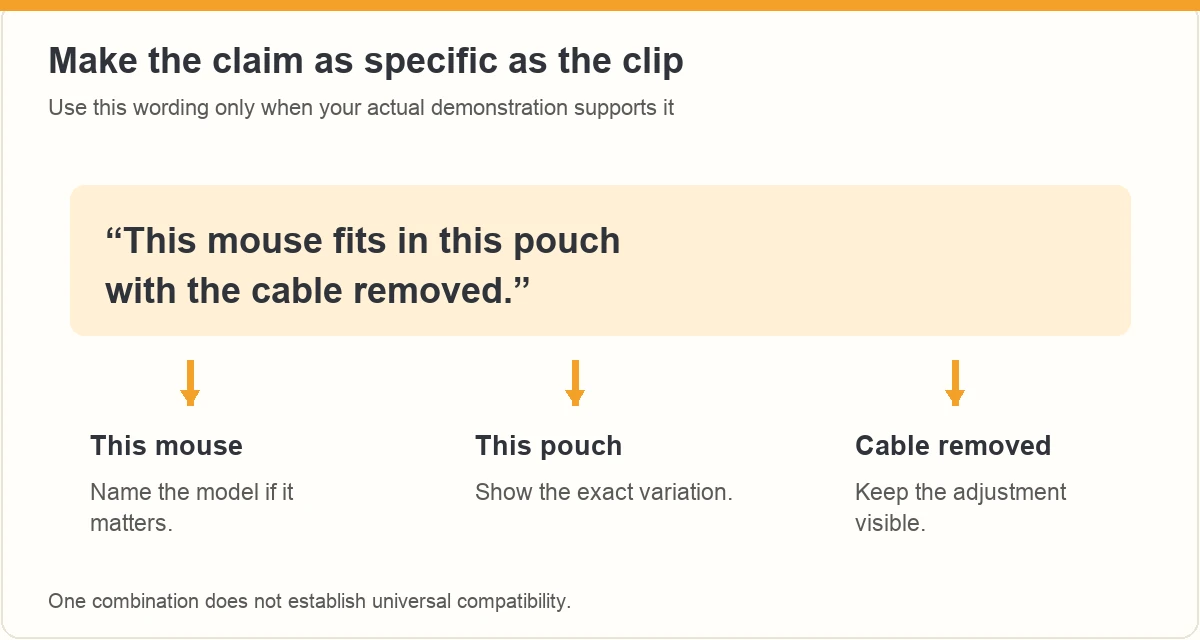
Keep language proportional to what the clip shows. “This mouse fits in this pouch with the cable removed” is more useful than “fits all accessories.” The FTC’s guidance on endorsements calls for real experience and support for claims. Do not turn one fit example into a universal compatibility statement.
When does clearance matter more than the footprint?
Some products need space around them to do their job. A storage box needs room for its lid to open. A stand may need a cable to bend behind it. A sliding tray needs an unobstructed travel path.
Show the product at rest and then through the motion the buyer intends to use. Keep the camera wide enough to include the obstruction. If a shelf or wall limits the motion, show that limitation rather than moving the product for the final shot.
For powered, heated or installed products, follow the manufacturer’s stated installation and clearance instructions. Do not invent a safe gap from a filming example. If you cannot verify those instructions, demonstrate a simple unpowered organizer or pouch instead of offering installation advice.
How can you explain the result without overstating it?
Pair one sentence with each visible piece of evidence. A simple structure is: what was measured, what was tried, what happened and what remains unknown. For example: “I measured the opening, put my own mouse through it, and closed the pouch. I have not checked larger models.” Use that sentence only after actually performing those steps.
Keep comparison objects in roughly the same plane as the product. A hand, mug or phone can give context, but those objects vary in size. Give a named model or measurement when precision matters. Do not treat a perspective trick as evidence that something is unusually small.
Our script-structure guide can help keep the explanation short. Use the actual result to write the line, even when that result is a limitation.
What should you check before the video is ready?
- All measurement labels use the correct unit.
- The ruler’s start and end are visible at least once.
- Outside, inside and opening dimensions are clearly distinguished.
- The fit sequence includes any adjustment needed to make it work.
- The product and relevant variation match the intended listing.
- The export remains readable on a phone without zooming into tiny captions.
Amazon describes relevant demonstration, meaningful information and correct ASIN association in its explanation of influencer videos. Read the short-review product guide for more ways to choose a question that is visible on camera.
Frequently asked questions
Is holding the product in my hand enough to show its size?
A hand can give a rough sense of scale, but hand sizes and camera positions vary. Add a ruler or a named comparison object when size affects the buying decision. Keep the comparison beside the product, then demonstrate the actual fit if the question is whether something goes inside.
Should I quote the listing or measure the product myself?
You can identify a manufacturer or listing dimension as such, but do not present it as your own measurement. If your video promises a measurement, show how you obtained it and specify the unit and endpoints. Investigate a discrepancy before saying that the listing or your own reading is definitive.
Can I say a pouch fits every mouse after testing one?
No single example establishes universal fit. Identify the mouse you used and show the insertion and closure. Other models may have different shapes or dimensions. A useful conclusion explains the demonstrated combination and any adjustment, such as removing a cable, rather than making an unsupported compatibility promise.
Should I use a phone measuring app instead of a ruler?
For a small product demonstration, a clearly filmed physical ruler is an easy reference for viewers to inspect. If you use an app, check its documented limitations and label the result appropriately. Do not use an approximate visual estimate as proof that a tight or safety-critical installation will fit.
What should you do next?
Show the dimension that limits the buyer’s use, then show the action. A visible opening, a complete insertion and an ordinary closure answer the fit question more clearly than calling the product compact.
ACE from Zonbase is an Amazon product research agent for creators. It shows which products have real demand and few existing videos, then helps you plan what to film and say. Start the free ACE training to plan your next review video.
Show the moment that decides fit
Plan the measurement, insertion and closure before you start recording. Explore ACE training if you want a guided way to turn that sequence into a product video.
ACE is separate from Amazon. Training does not guarantee Amazon acceptance, placement or earnings. Check the current page for availability and offer details.
