

By Zeeshan · Last updated November 26, 2026
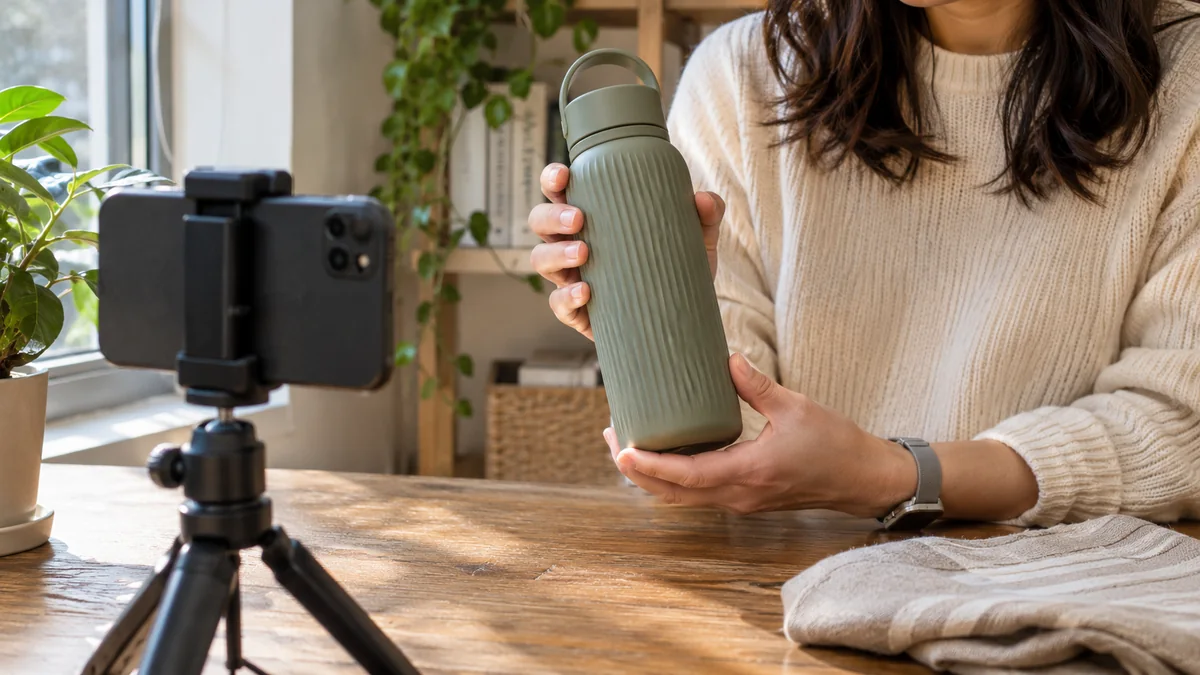
Show texture with a clear close view and soft side lighting, then film ordinary handling that keeps the contact area visible. Describe how the exact item felt to you under the shown conditions. A video cannot transmit touch or prove universal comfort, slip resistance or durability from one handling shot.
A bottle can look smooth in a bright front light and visibly ribbed when the light comes from the side. The buyer needs more than an attractive detail shot: they need to understand where the surface is, how it is held and which conclusions the video can reasonably support.
Table of Contents
Choose a surface question the camera can answer
Start with a concrete uncertainty: where are the ridges, how large is the textured area, or does the handle leave room for your fingers? Film the exact product and variation you have. Different coatings, sizes and materials can make a broad product family a poor substitute for the item being discussed.
Amazon’s product video guide encourages focused demonstrations of products in use. That is a useful editorial principle, not a guarantee of approval in every creator program. Read the current rules for the account and placement you use.
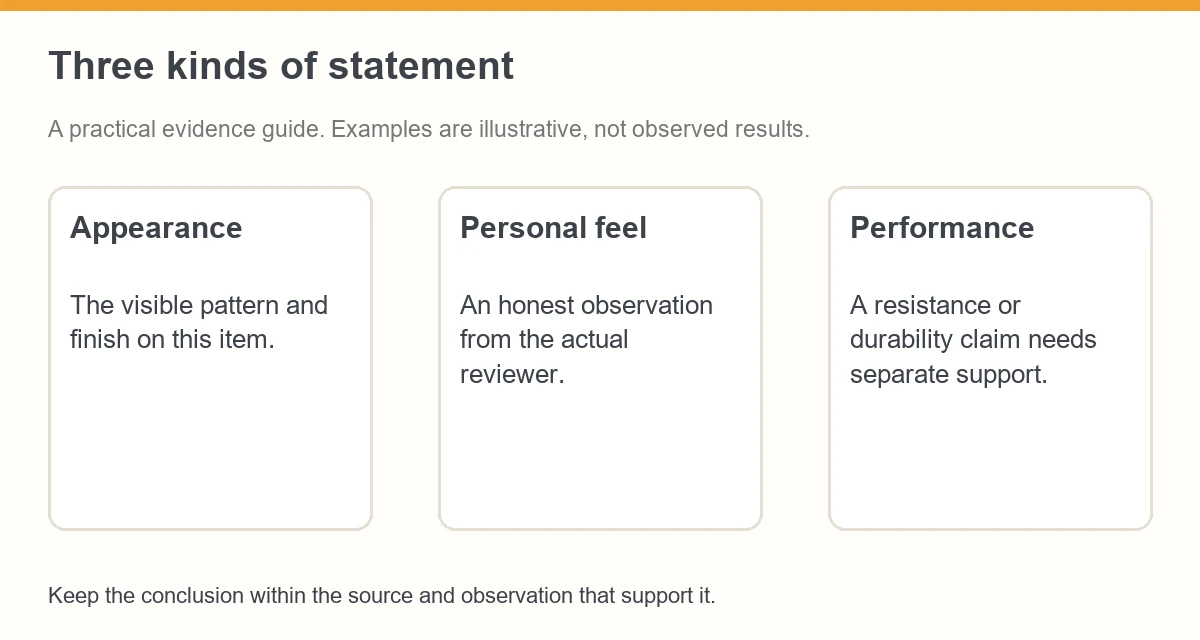
Keep surface appearance, personal feel and a measured performance claim separate. The first can be visible. The second needs honest narration. The third needs evidence beyond a polished close view.
Light the relief without changing the product
Try a broad light from one side so that shallow grooves and raised areas cast gentle shadows. Check the result on the actual camera before recording. Reduce glare by changing the light or camera angle, while keeping the color and finish believable.
Do not add oil, water, powder or a temporary coating to make the texture dramatic unless that material is genuinely part of the ordinary demonstration and appropriate under the product instructions. An altered surface may answer a different question from the one the shopper expects.
- Keep focus on the surface the viewer needs to inspect.
- Include enough of the item to preserve location and scale.
- Avoid extreme exposure or color adjustments that change the finish.
- Check that your hands do not cover the texture throughout the shot.
For shiny surfaces, use the separate reflective product filming guide. Its glare controls help visibility; they do not establish how a material feels.
Connect the close view to ordinary handling
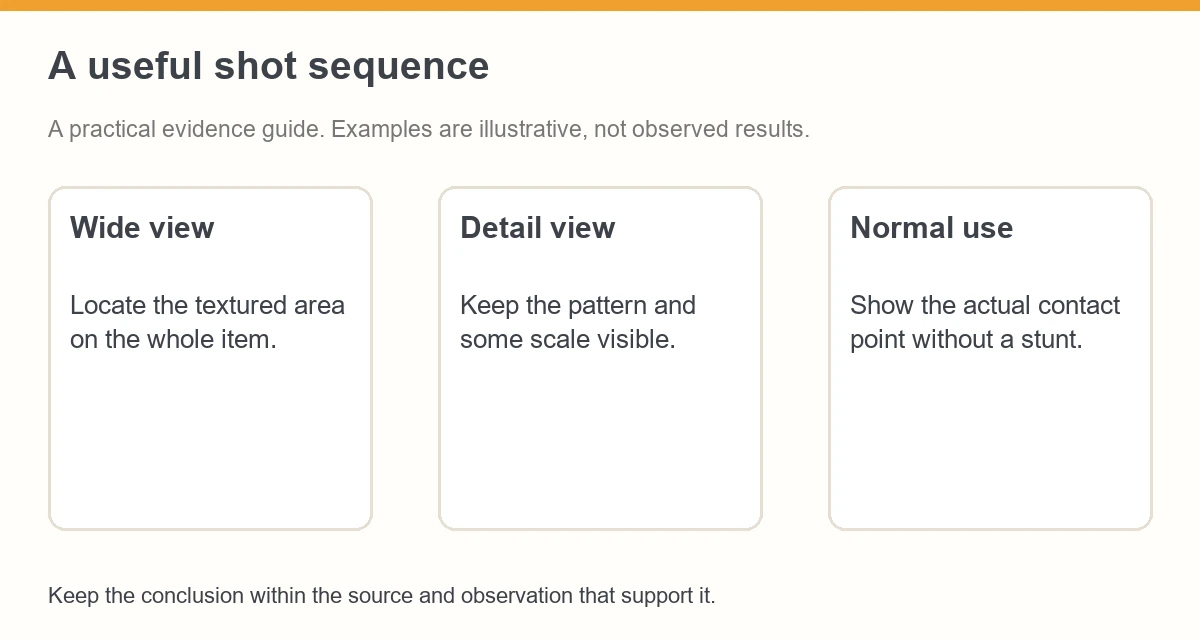
Begin with a wider view of the whole item. Move to a close view that shows the surface pattern, then return to a normal pickup or control action over a stable surface. Keep the hand position and contact area visible long enough to understand them.
Use an action appropriate to the actual item and its instructions. Do not stage a drop, a forced slip or an unsafe load to create a stronger conclusion. A calm tabletop demonstration is often enough to show where the grip area meets the hand.
| Shot | Useful answer | Limit |
|---|---|---|
| Whole item | Where is the textured area? | Fine detail may be too small. |
| Surface detail | What pattern or finish is visible? | The viewer still cannot feel it. |
| Ordinary handling | Where does the hand contact it? | One action does not measure slip resistance. |

Narrate personal feel as personal feel
Hypothetical storyboard: a creator shows the ribs on a reusable bottle, then picks it up with a dry hand over the table. A suitable observation would describe what the creator actually noticed in that take. It would not turn the shot into a claim that the bottle cannot slip in rain, with gloves or for every user.
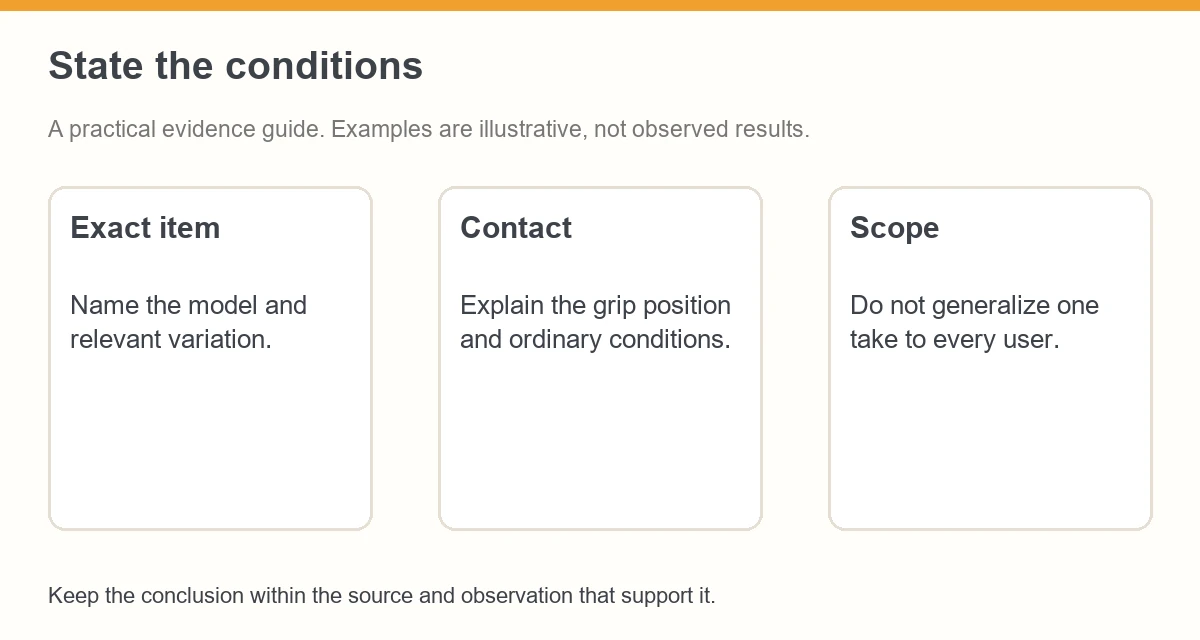
Keep your language tied to real experience when you make the actual review. Do not read the example as testimony about a product you have not used. State relevant conditions that change the meaning, such as the grip position or an accessory fitted to the item.
The FTC’s guidance on honest endorsements explains that endorsements should reflect the real user’s experience and should not make deceptive performance claims. Keep any required relationship disclosure clear under the applicable rules.
Avoid turning a surface view into a durability test
A close view can show a seam or a coating in its current condition. It cannot establish how that coating will wear after months of use. Likewise, a comfortable hold in one session is not an ergonomic assessment for every hand size or condition.
If the manufacturer makes a specific material or resistance claim, identify the source and exact model before repeating it. Distinguish that stated claim from your own observation. Do not invent a certification icon, test result or comparison number to make the video more persuasive.
If size is the real concern, link the observation to the size and fit guide rather than asking texture footage to answer dimensions or capacity.
Edit without hiding what changed
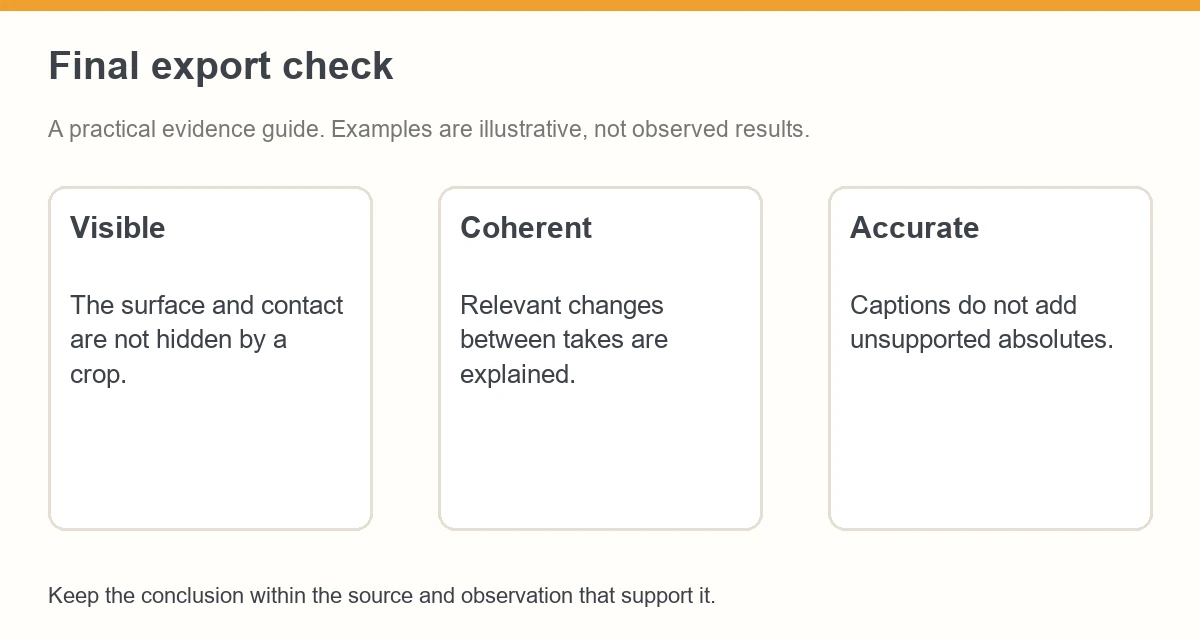
Keep the sequence coherent. If you change the surface condition, attachment, hand position or camera angle between takes, explain any change that affects the comparison. A cut should not make two different situations appear to be one continuous action.
Use a short caption for a necessary condition or a personal observation. Do not let a caption contradict the narration by adding “never slips” or another absolute claim. The caption guide covers readable placement; it cannot supply missing evidence.
Review the exported video, including the transitions. Check that a crop has not removed the contact point or made a normal hold look like a special test.
Check whether the buyer learned something specific
Watch the finished sequence once without sound. Can you locate the texture and see the ordinary contact? Then listen to the narration without the image. Does it describe the actual observation without promising an untested result?
Keep the final conclusion narrow. The viewer should leave knowing what the surface looks like, where it is used and what you personally observed. That is more useful than an unsupported claim that one pattern makes a product safe, comfortable or durable for everyone.
ACE from Zonbase is an Amazon product research agent for creators. It shows which products have real demand and few existing videos, then helps you plan what to film and say. Start the free ACE training to plan your next review video.
Frequently asked questions
Can a video prove that a material is soft?
It can show movement or compression and include an honest personal description. It does not let the viewer feel the material or establish a universal comfort result.
Should I wet the item to show grip?
Use only a normal, permitted demonstration appropriate to the product. Do not add a wet condition just to create a dramatic safety or slip claim.
Can I describe the product as nonslip?
Do not infer a resistance claim from one handling shot. Identify the relevant source and evidence, and keep your own observation separate.
Do I need a macro lens?
Use equipment that gives a clear, focused view with enough product context. Extreme magnification is not a requirement and can make scale harder to understand.
Show the surface clearly, show ordinary contact and give the viewer an honest boundary around the conclusion.
Also run an established business?
Business owners can separately review ACE’s current business data licensing page for its eligibility and process. Assess the option on its own terms. Acceptance and payment are not guaranteed.
