


By Zeeshan · Last updated November 24, 2026
Before buying a return pallet, obtain exact product identifiers, compare them with official recall notices and record every unresolved match. For products within the U.S. Consumer Product Safety Commission’s scope, start with CPSC recall information and the manufacturer. A search with no match is not proof that a product is safe or legal to resell.
A manifest may say “desk fan” and a photo may show an intact box. Neither tells you whether that exact model or production batch is affected by a recall. Treat recall screening as a purchasing decision you make before assigning resale value, then repeat the relevant checks on the actual received units.
Table of Contents
Define what this check can establish
This guide is for a U.S. resale screening workflow using CPSC information. Other jurisdictions and product categories can involve other authorities and requirements. It is not a complete compliance audit, a product safety test or an instruction to repair recalled stock.
CPSC’s guidance on online resale states that selling recalled products is illegal and directs resellers to check its recall information before listing. Do not turn “used,” “as is” or “customer return” into an exemption. Follow the actual recall notice and the relevant authority’s instructions.
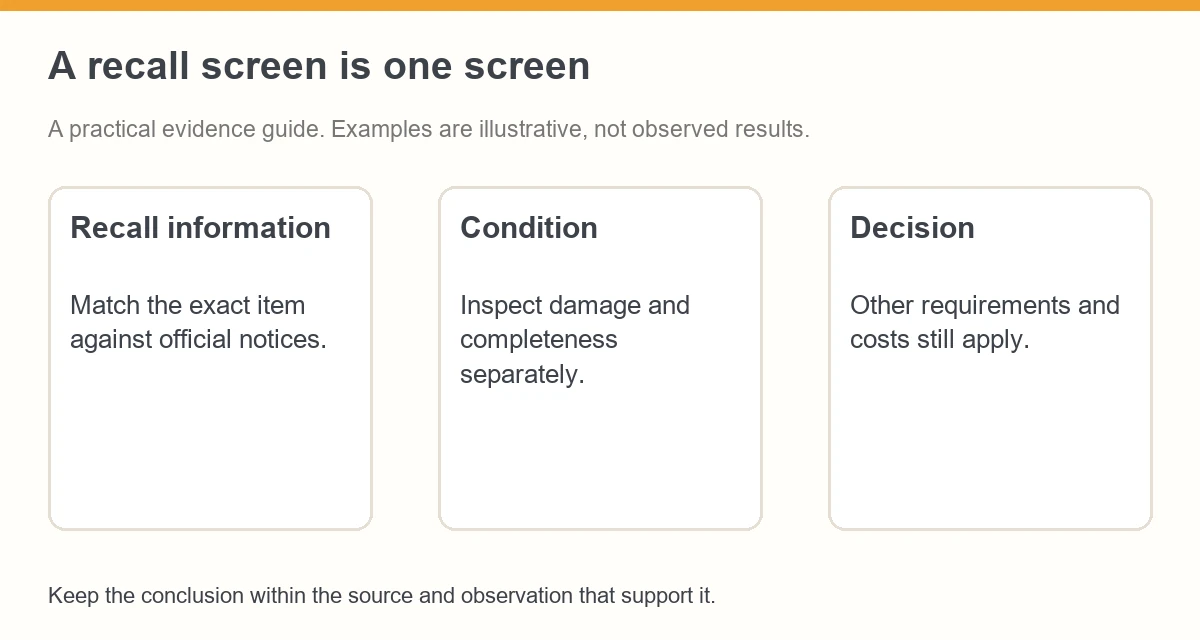
A recall check and a condition check answer different questions. A working product may still be affected by a recall. A product without a recall match may still be damaged, incomplete or unsuitable for resale. Keep those findings in separate fields.
Get identifiers before treating the manifest as inventory
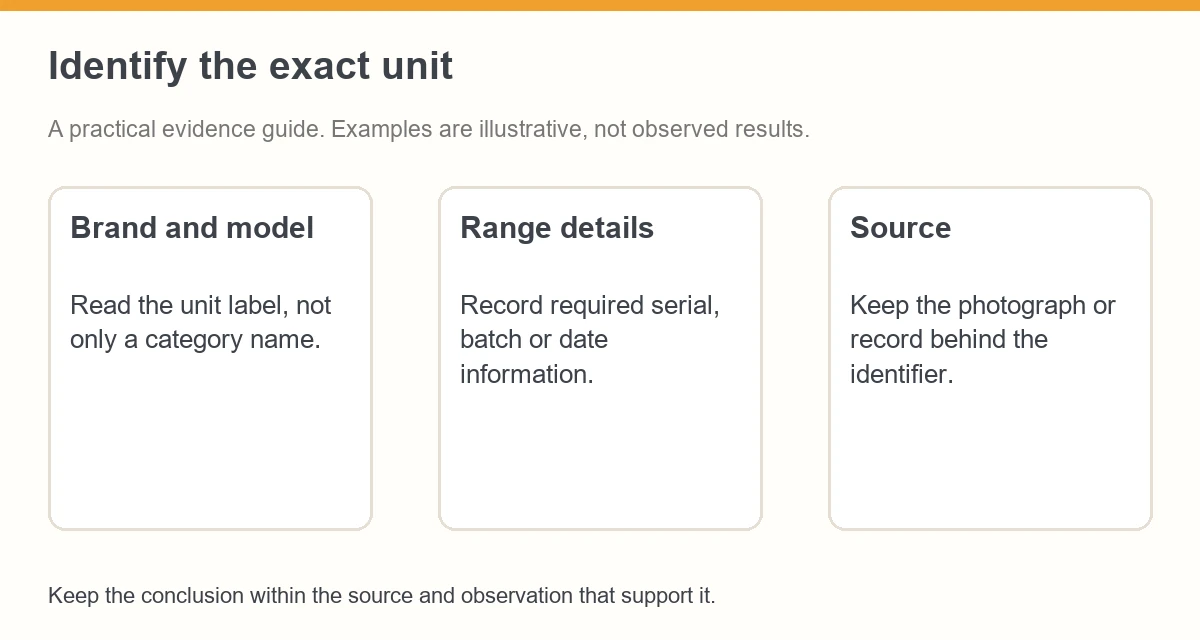
Ask for the brand, exact model, model label photograph and any batch, serial or date code needed to distinguish the item. Use identifiers from the actual unit where available, then compare the box and manifest. Packaging can belong to a different version.
- Identify which manifest rows have enough detail for a meaningful search.
- Record the source of each identifier, such as unit label or supplier description.
- Keep quantities tied to the exact identified model rather than the broad category.
- Mark obscured, missing or conflicting identifiers as unresolved.
Use the manifest reading guide for the broader lot description. Here the question is narrower: can you identify the item well enough to compare it with a recall notice? A vague manifest line is not a completed check.
Read the notice, not just the search result
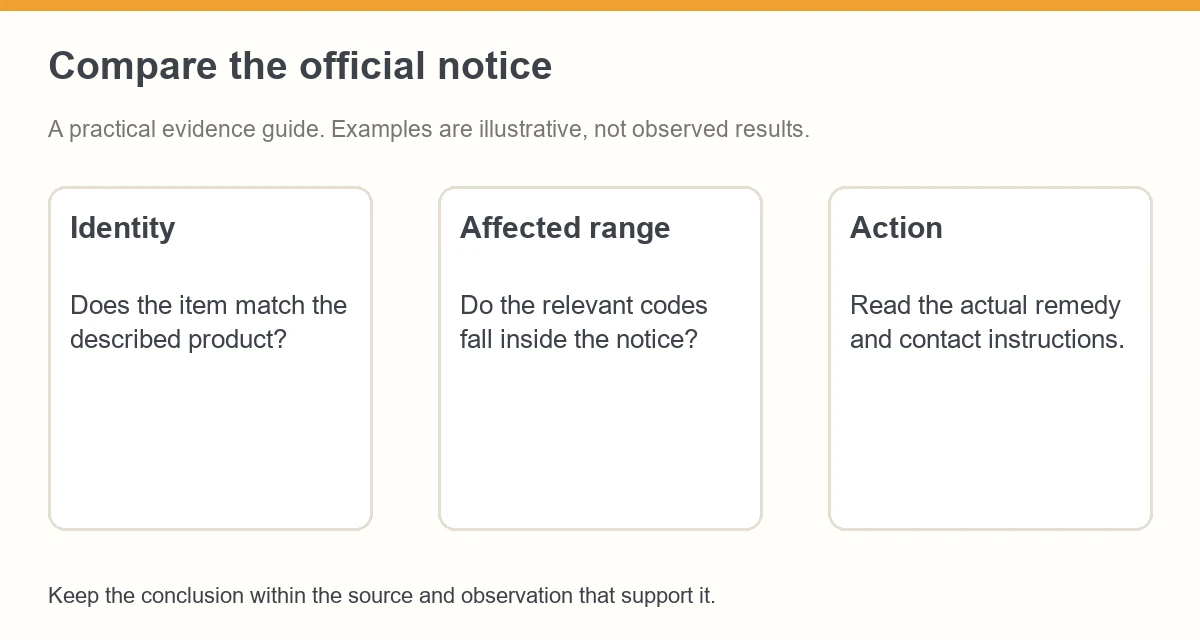
Use the official CPSC recall search and the manufacturer’s current recall information. Search by brand and model, then inspect a potentially relevant notice in full. Compare the product description, identifying codes, dates and photographs with your evidence.
Do not reject or clear an entire product family based on one similar thumbnail. A notice may define a particular range. If you cannot resolve the range from the available label, keep the unit unresolved and use the contact route in the official notice for clarification. Do not improvise a repair or perform a hazardous demonstration to settle the question.
| Record | Why it matters |
|---|---|
| Exact unit identifier | Defines what you actually compared. |
| Official notice URL and check date | Preserves the source and when it was read. |
| Affected range comparison | Explains a match, mismatch or unresolved result. |
| Required next action | Keeps a hold or official remedy separate from resale clearance. |
Handle an ambiguous match before bidding
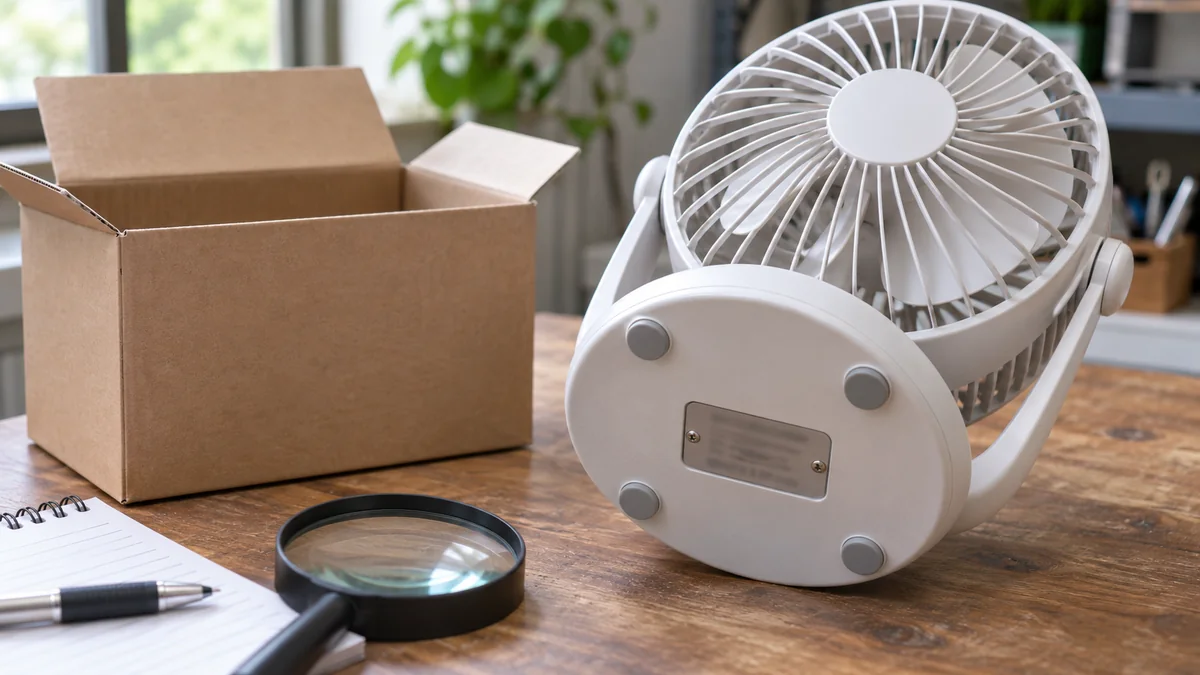
Hypothetical example: a lot contains twelve fans. Eight unit labels can be read; four cannot. One notice covers a particular model and production range. You can compare the eight readable labels, but the other four do not become cleared because the supplier calls the lot “working returns.” These counts are an illustration, not a real lot inspection.
Do not count unresolved units as verified sellable inventory in your purchase worksheet. Decide whether the remaining uncertainty is acceptable before bidding, based on the real terms and the loss you can carry. If the decision requires resale value from units whose identity you cannot establish, pause the purchase rather than fill the gap with an assumption.
A supplier’s reassurance is useful context, but it is not a substitute for comparing the actual identifiers and the official notice. Preserve the specific answer and its scope.
Separate affected, unresolved and other stock
When a potential recall issue is identified, keep the affected or unresolved stock out of the normal listing and fulfillment process while you determine the required official action. Make the status clear to anyone who handles the inventory. Do not let a warehouse movement silently convert a hold into available stock.
Follow the notice and manufacturer or authority guidance for the exact item. Do not assume that a cosmetic adjustment, a missing accessory replacement or a supplier refund establishes a valid remedy. This article does not authorize selling a recalled item after a repair or tell you how to dispose of it.
Keep ordinary delivery discrepancies separate. The delivery discrepancy guide helps record what arrived; it does not clear a recall or replace the required action.
Recheck what actually arrives
Before purchase you may only have supplier photographs. After delivery, compare the received identifiers with that earlier evidence and repeat the relevant searches before listing. An unexpected model substitution needs its own review. Keep the check date and original findings instead of overwriting the history.
Retain a simple record per identified product or clearly defined batch: identifier source, official notice checked, comparison result, unresolved questions and action. Use your normal controlled records. Do not upload personal customer details or private supplier records into a public article folder.
Recall information can change. A dated search is evidence of the check performed at that time, not a permanent warranty. Review current official information again when the resale decision is made.
Keep the purchase decision honest
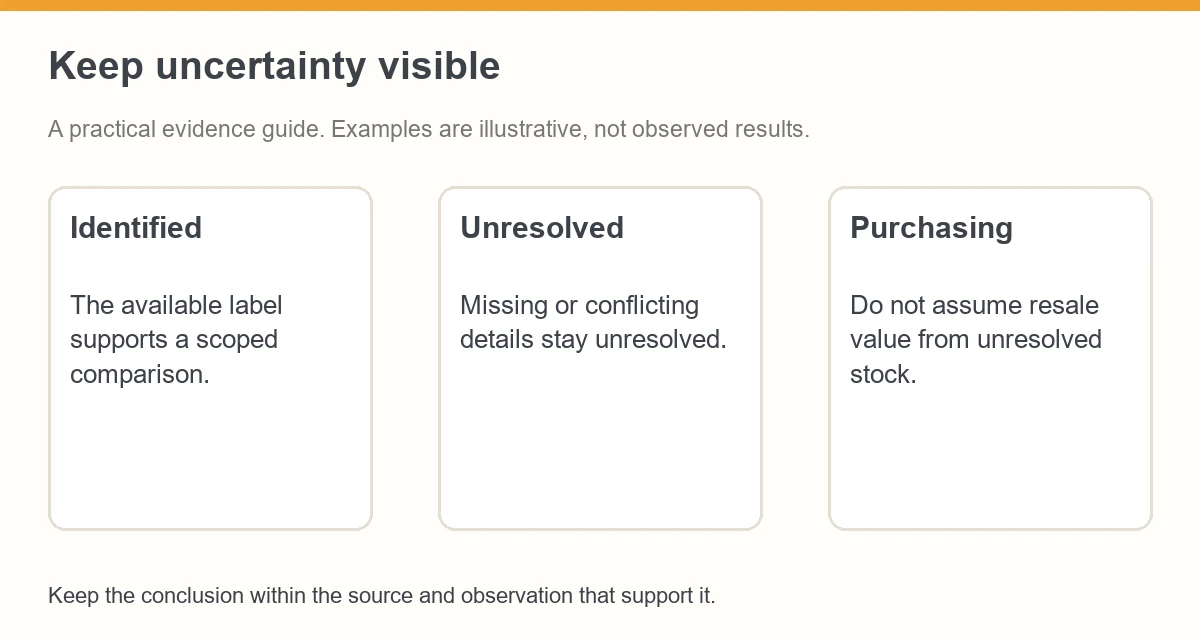
Use the recall screen to remove unsupported assumptions from the lot valuation. Keep condition, authenticity, completeness, other compliance checks and commercial costs visible as separate issues. Passing one screen does not establish the others.
The useful result is a documented decision: which items were identified, which notices were compared and what remains on hold. If the available evidence cannot support the inventory value you need, you have a reason to decline or seek specific information before committing.
ZonBase is an Amazon product research suite with tools for product research, keywords and supplier grading. Its Zon Grading tool takes a list of products by UPC or ASIN, such as a supplier list, and uses your cost to estimate the margin on each item before you commit money to stock.
Frequently asked questions
Does a working product pass a recall check?
No. Function and recall status are different questions. Compare the exact identifiers with current official information.
Is a search with no match a safety certificate?
No. It records the search you performed. Identification gaps, other authorities, damage and other requirements can still matter.
Can I rely on the box model alone?
Compare the actual unit label where available. If the box and unit conflict, keep the identity unresolved until it is resolved.
Should I perform the recall remedy myself?
Follow the actual notice and the manufacturer or authority instructions. Do not improvise a repair or infer resale clearance from this guide.
Screen the exact product before you assign it resale value. Preserve uncertainty as uncertainty until the relevant evidence resolves it.
Also run an established business?
Business owners can separately review ACE’s current business data licensing page for its eligibility and process. Assess the option on its own terms. Acceptance and payment are not guaranteed.
