

By Zeeshan · Last updated November 7, 2026
Direct answer: To film product cleaning for an Amazon review video, check the exact item’s care instructions, show the starting condition and permitted access, then record the relevant cleaning step and reassembly. Keep cuts and preparation clear. A neat final appearance does not prove sanitation, durability or that the method is safe for other products.
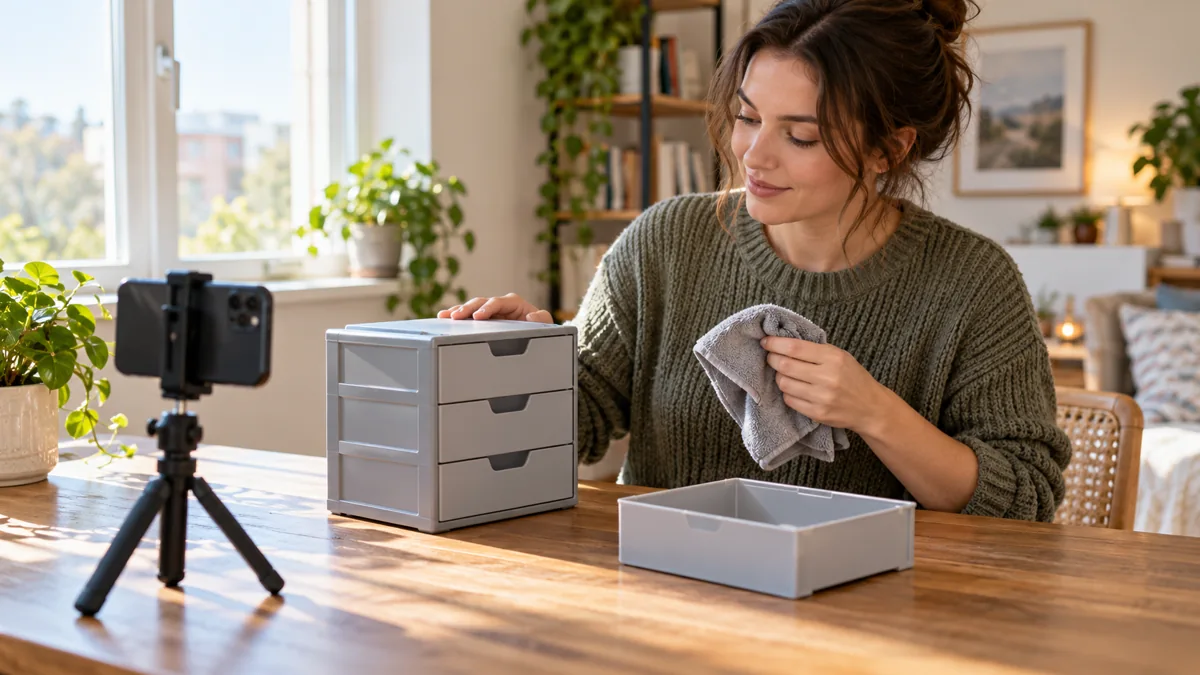
A removable drawer may look easy to clean until you try to reach the corners or line it up with the runners afterward. Those small actions are useful review material. The aim is to help a shopper understand the everyday care task, with the product and its instructions setting the limits of what you show.
If you are planning your first product demonstration, explore the current ACE training page for the broader creator workflow. This guide concentrates on filming a specific care task, not proving a cleaner’s performance.
Table of Contents
Which care question does the video answer?
Choose one ordinary question: can you reach the inside corner, remove the permitted tray or put the drawer back without obscuring the runners? A focused question makes the relevant close-up easier to plan. A general montage of wiping surfaces may never show the point that matters to a buyer.
Amazon’s seller product-video guidance recommends focused, honest demonstrations in everyday settings. That is useful production guidance, but it is not a replacement for the current rules governing your own creator account or the care directions supplied with the product.
What should you check before you film?
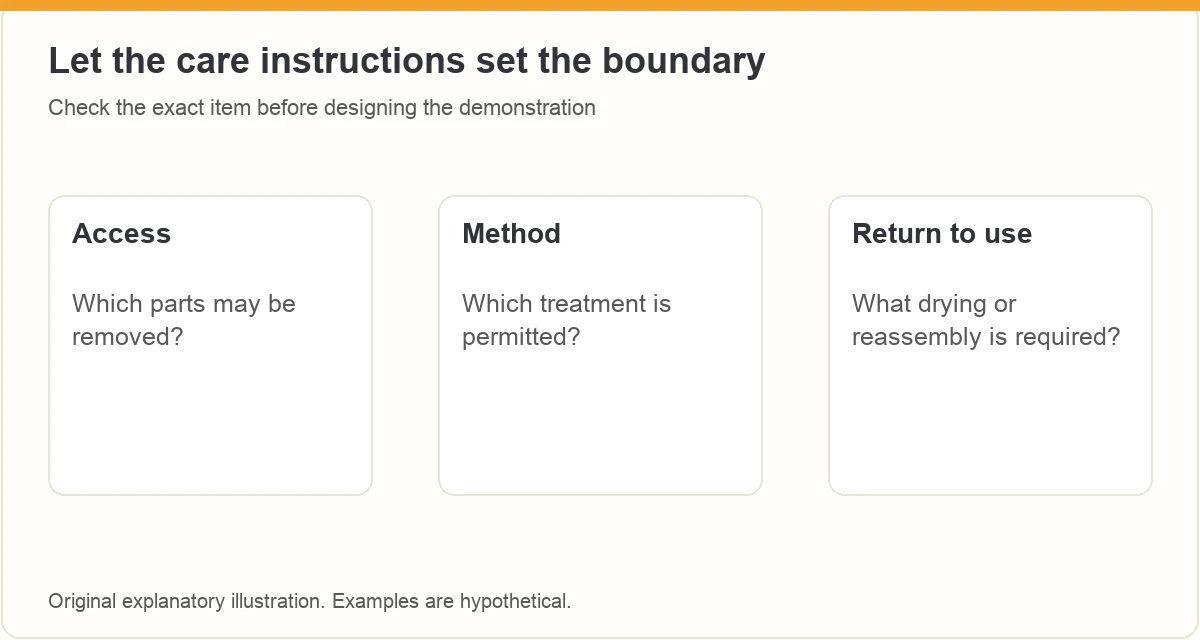
Identify the exact model and read its care instructions. Confirm which parts the manufacturer permits you to remove, which treatment is allowed and what needs to be dry or reassembled before use. Do not infer dishwasher safety, water resistance or chemical compatibility from how a material looks.
- Choose an unpowered item for a simple first demonstration.
- Keep the supplied instructions available while planning the shots.
- Identify any task you cannot safely perform or cannot verify.
- Keep camera equipment and unrelated belongings away from the work area.
If the directions are missing or ambiguous, limit the video to visible access and your clearly identified observations. Do not invent a cleaning recipe to complete the footage.
How do you show the starting state honestly?
Record the actual surface before the care step, using lighting that lets the viewer see it. Keep a stable reference view if you plan to show the result from the same angle. Explain any preparation that matters, such as removing stored objects before filming. Do not apply a dramatic stain merely to imply a test you did not conduct.
| Buyer question | Useful view | Important limit |
|---|---|---|
| Can I reach the corner? | Inside edge with hand position visible | Do not hide the corner with your fingers |
| Does this part come out? | Permitted removal in a continuous view | Follow the actual release method |
| How does it go back? | Runners and ordinary closing action | Do not force an unfamiliar mechanism |
Which actions need an uninterrupted view?
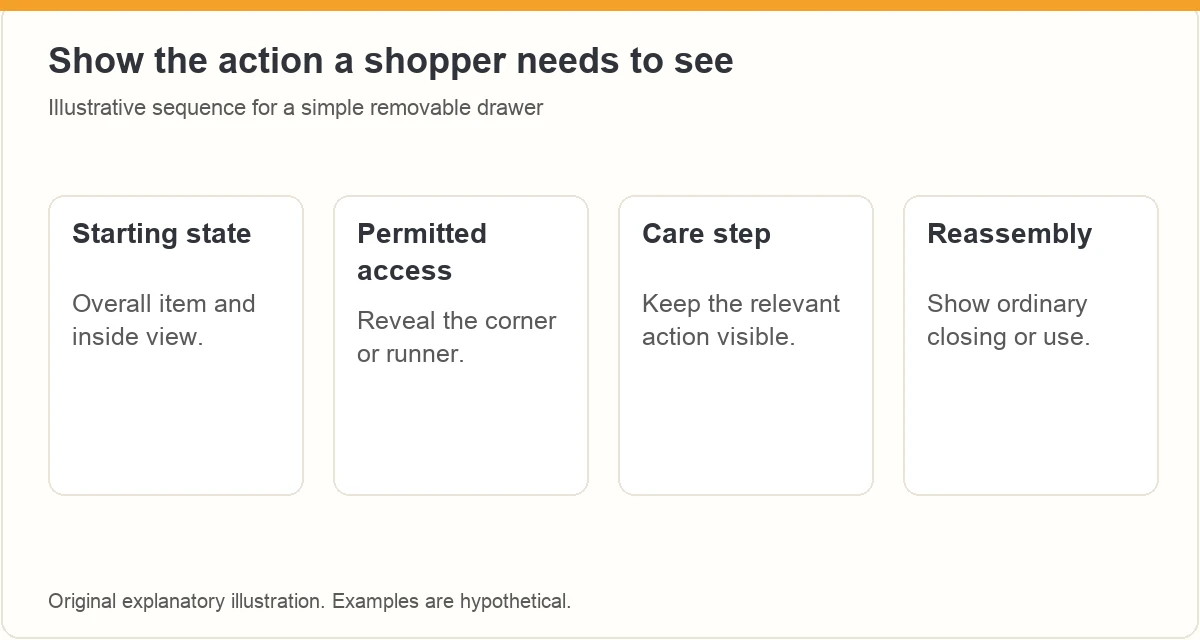
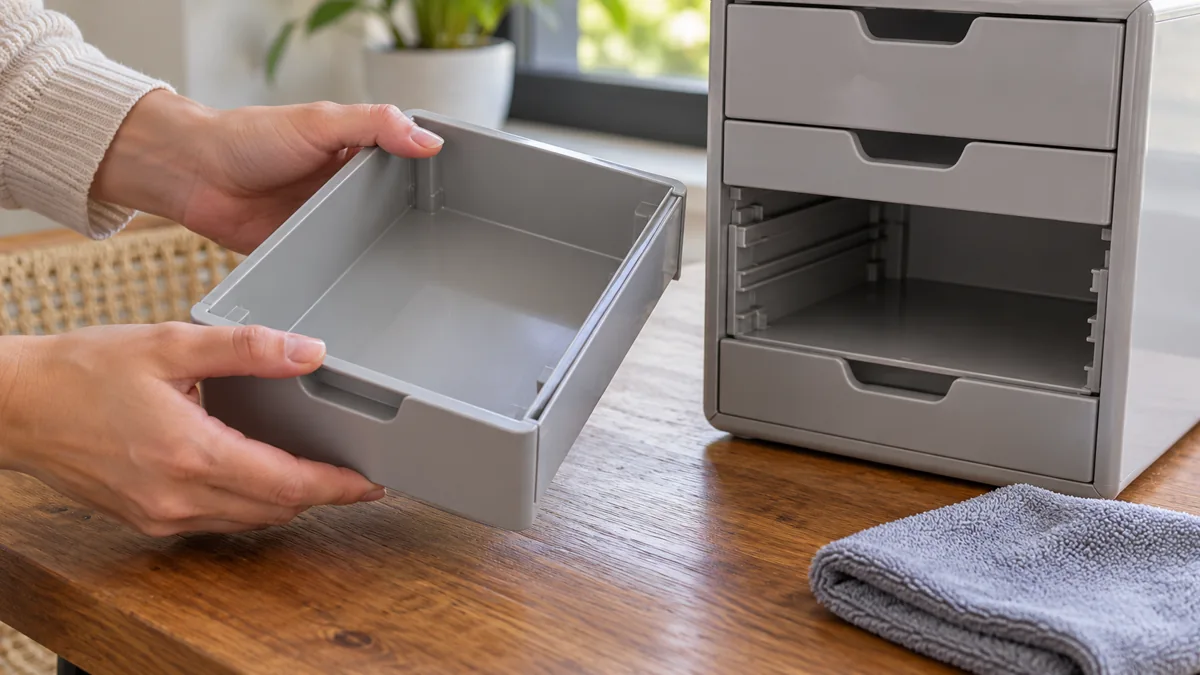
Keep the buyer-critical action visible: reaching a narrow area, releasing a permitted insert or aligning it afterward. Pause to reposition the camera instead of trying an awkward one-handed movement. If a repeat close-up explains the action, identify it as a repeat rather than presenting it as the original attempt.
For a hypothetical small drawer organizer, a useful sequence is an overall view, the permitted drawer removal, access to the inside corners and the drawer’s return to the housing. This is a planning example. The illustrated organizer is not a tested product or evidence that another model can be handled the same way.
How should you handle waiting and edits?
If the actual instructions require drying or another waiting step, do not make an edit look like an immediate return to use. Say what happened between the shots. Keep the duration of an edited clip separate from any actual time claim. Only state a measured time if you recorded the relevant start, finish and conditions.
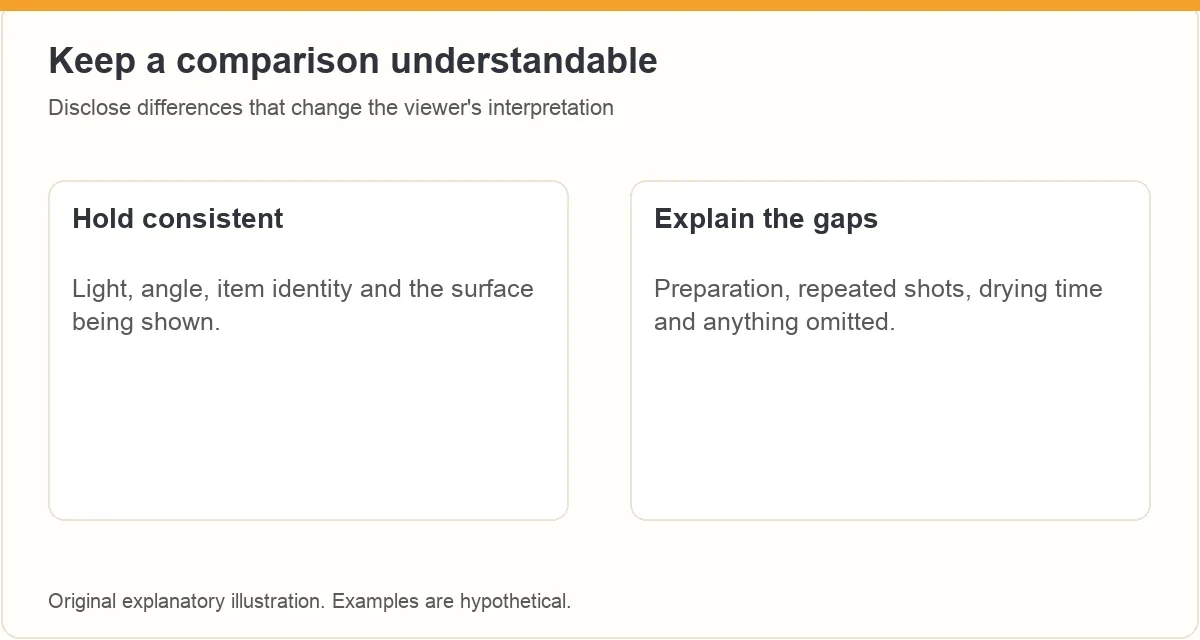
Keep any before-and-after view comparable. A brighter lamp, different camera angle or hidden replacement part can change the appearance without showing a cleaning result. Explain those changes if they are necessary; do not let the visual imply a controlled comparison when it was not one.
What should the narration and captions explain?
Name the part and describe the action while the viewer can see it. Mention a relevant limit at the point it matters, not only in a closing disclaimer. Say that you are showing access or an ordinary care step rather than claiming that the product is sanitized, allergen-free or permanently restored.
W3C’s media planning guidance encourages considering captions and visual description during production. Plan room for accurate captions and speak the important visual information naturally. Our readable captions guide covers the final playback check in more detail.
What belongs in the final care-video review?
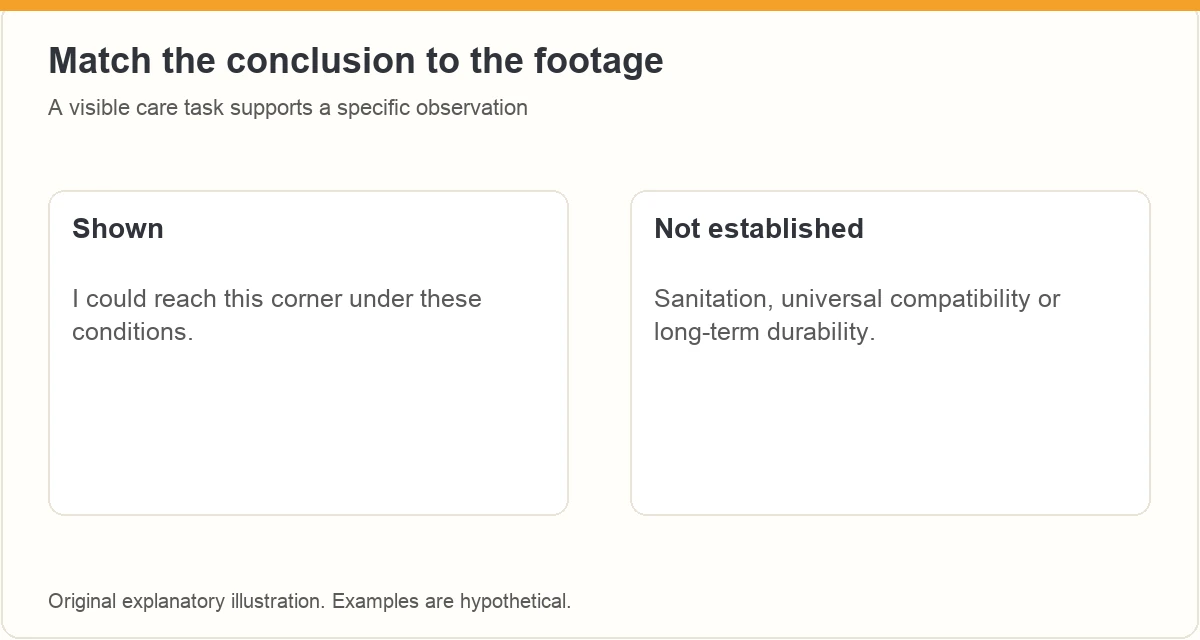
Check that the starting state, permitted access, care action and reassembly are understandable. Confirm that no cut hides the difficult step or an important waiting period. Read the conclusion against the footage: it should describe what the viewer can actually evaluate, not a broader benefit you hope is true.
If putting the item back together is the main difficulty, the assembly filming guide can help you choose the detail view. Keep the care instructions and the specific product identity with your private filming notes for future edits.
Frequently asked questions
Can I assume a plastic part is dishwasher safe?
No. Use the care instructions for the exact model. Material appearance does not establish an approved cleaning method.
Can I shorten a drying period in the edit?
You can omit uneventful footage if you explain the wait and do not imply that immediate reuse was permitted or demonstrated.
Does a clean-looking result prove sanitation?
No. An ordinary visual demonstration does not establish a sanitation or other health-related performance claim.
What if I cannot remove the part safely?
Do not force it for the camera. State the limit and show only the access or care steps you can support within the instructions.
What should you do next?
A useful care video shows a modest task clearly. Let the instructions define the method, preserve the important actions and keep the conclusion as specific as the footage.
ACE from Zonbase is an Amazon product research agent for creators. It shows which products have real demand and few existing videos, then helps you plan what to film and say. Start the free ACE training to plan your next review video.
For more on this, see compare product versions, record product noise and film reflective products.
Plan the next useful product video
Explore ACE’s current training to consider the broader creator workflow. Choose a task you can demonstrate honestly with products you actually have.
ACE is separate from Amazon. Training does not guarantee Amazon acceptance, placement or earnings. Check the current page for availability and offer details.
